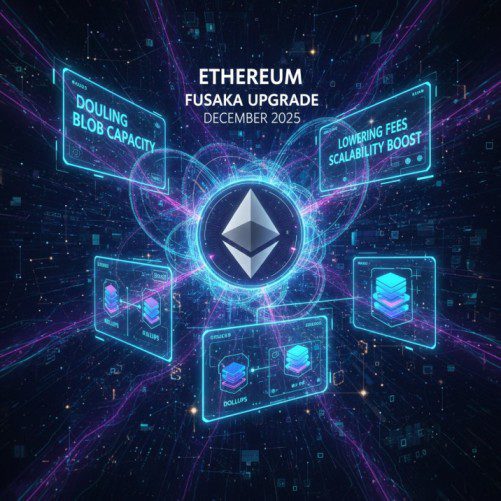
Ethereum Fusaka Upgrade Scheduled for Dec. 3 Launch
Ethereum, the world’s most popular blockchain for smart contracts, DeFi, and NFTs, is gearing up for another big leap forward. The Fusaka Upgrade is officially scheduled to launch on December 3, 2025, and it promises to make Ethereum faster, cheaper, and more scalable than ever before.
If you’re a developer, investor, validator, or just a crypto enthusiast, here’s everything you need to know about this milestone event — in plain English.
🌐 What is the Fusaka Upgrade?
Think of Fusaka as Ethereum’s next major software update, similar to how your phone gets an upgrade to add new features and fix bugs.
This upgrade focuses on scaling Ethereum for mass adoption, making it more efficient for Layer-2 rollups, reducing transaction costs, and improving the experience for both developers and users.
The last major Ethereum upgrade, Dencun (March 2024), introduced “blobs,” a new type of data storage to help reduce costs. Fusaka builds on that foundation by expanding blob capacity and adding powerful new tools like PeerDAS (Peer Data Availability Sampling).
Key takeaway: Fusaka is all about making Ethereum ready for millions of users and thousands of applications, without compromising on decentralization or security.
⚙️ Major Features Coming with Fusaka
Here are the most exciting changes Fusaka will bring to Ethereum:
1. Bigger Blobs = Lower Fees
- Blobs are like temporary data containers that Layer-2 networks use to post data to Ethereum.
- Currently, Ethereum supports 6–9 blobs per block, which limits throughput.
- After Fusaka, this will double to 14–21 blobs, gradually rolled out over two smaller updates in December and early January.
- Why it matters: More blobs = more space for data = lower fees for rollup transactions like those on Arbitrum, Optimism, and Base.
2. PeerDAS (EIP-7594) – Smarter Data Verification
- Instead of every validator downloading all data, they can now sample small chunks from other peers.
- This makes running a node cheaper and less resource-intensive, encouraging more decentralization.
- Translation: Smaller validators can stay active without needing super-powerful hardware.
3. Higher Gas Limits
- Ethereum will increase its block gas limit, allowing more transactions to fit into each block.
- Result: Faster processing times and smoother performance during periods of high demand.
4. Verkle Tree Progress
- Fusaka lays the groundwork for Verkle Trees, an upgrade that will make Ethereum’s state data lighter and easier to verify.
- This means smaller proof sizes and better performance in the long run.
5. Security First: $2M Bug Bounty
- The Ethereum Foundation is running a four-week security audit program with up to $2 million in rewards for anyone who discovers vulnerabilities before the upgrade goes live.
- This ensures Fusaka launches safely and securely.
🗓 Fusaka Rollout Timeline
Ethereum developers have mapped out a clear schedule leading up to December 3. Here’s what to expect:
| Phase | Date | What Happens |
|---|---|---|
| Holesky Testnet | Oct 1, 2025 | First public testing phase begins |
| Sepolia Testnet | Oct 14, 2025 | Wider testnet deployment |
| Hoodi Testnet | Oct 28, 2025 | Final test before mainnet |
| Mainnet Launch | Dec 3, 2025 | Fusaka goes live on Ethereum |
| BPO Fork #1 | Mid-December | Blob capacity raised to 10/15 |
| BPO Fork #2 | Late Dec / Early Jan | Final blob capacity raised to 14/21 |
BPO = Blob Parameter Only, meaning these changes won’t require a full network upgrade.
🌍 Why This Matters for Ethereum Users
Whether you’re a casual user, developer, or validator, Fusaka will impact you in some way.
For Users
- Cheaper transactions on Layer-2 networks like Arbitrum, Optimism, and Base.
- Smoother experience with NFTs, DeFi, and gaming dApps.
For Developers
- More capacity means scalable dApps without worrying about gas spikes.
- Easier to work with blobs and data availability features.
For Validators
- Less resource-intensive nodes, thanks to PeerDAS.
- Need to update clients before Dec 3 to avoid falling out of sync.
⚠️ Challenges and Risks
While Fusaka is exciting, there are still potential challenges:
- Testnet Bugs – If major issues are found during October testing, the launch date could be delayed.
- Client Diversity Issues – Ethereum relies on multiple client implementations. If one lags behind, it could cause chain splits.
- Protocol Breakage – Some older smart contracts or DeFi apps might need updates to work smoothly with the new upgrade.
- Exchange Readiness – Not all wallets and exchanges upgrade instantly, which may cause short-term disruptions.
🪙 How Fusaka Might Impact ETH Price
Historically, Ethereum upgrades have influenced market sentiment. Here’s what to consider:
- Bullish factors:
- Bearish factors:
- If there are launch bugs or delays, market confidence could take a hit.
Pro tip: Don’t trade purely on upgrade hype — wait for confirmation and network stability.
🔮 The Road Ahead: Beyond Fusaka
Fusaka is part of Ethereum’s long-term roadmap, which includes several phases:
- Surge – Scaling improvements like rollups and blobs (where Fusaka fits in).
- Verge – Full introduction of Verkle Trees for lighter proofs.
- Purge – Simplifying the protocol by removing outdated components.
- Splurge – Adding miscellaneous improvements and cool new features.
The next big upgrade after Fusaka is rumored to be “Glamsterdam”, expected sometime in 2026.
Conclusion:
The Fusaka Upgrade is another huge step forward for Ethereum’s journey to becoming the world’s decentralized computer.
By doubling blob capacity, lowering fees, and making nodes more accessible, Ethereum is preparing for a future where millions of people interact with the network every day.
For now:
- Users: Sit tight — your dApps will get cheaper and faster.
- Validators: Update your clients before December 3.
- Developers: Test your projects on testnets starting October.
Mark your calendar for December 3, 2025 — Ethereum is about to level up again!