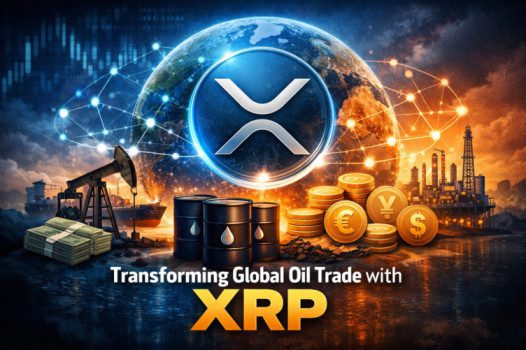
How XRP Can Solve the Global Oil Crisis
Revolutionizing Energy Trade with Speed, Transparency, and Borderless Liquidity
The global oil market powers modern civilization—but behind the scenes, oil trading still relies on outdated financial infrastructure. Slow cross-border settlements, excessive reliance on the U.S. dollar, high foreign exchange (FX) costs, and political risk all contribute to inefficiencies that ultimately raise energy prices worldwide.
Blockchain-based digital assets—particularly XRP—offer a compelling alternative. By enabling near-instant, low-cost, and neutral cross-border settlement, XRP has the potential to transform how oil is traded, financed, and settled globally.
This article explores how and why XRP could play a strategic role in addressing systemic problems within the global oil trade.
1. The Problem: Inefficiencies in Global Oil Trade ⚠️
Despite trillions of dollars moving through energy markets every year, oil trade settlements are still burdened by legacy systems.
🔻 Key Challenges
-
Slow settlement times: Cross-border oil payments can take 2–5 business days, tying up capital and increasing counterparty risk.
-
Dependence on SWIFT: The global messaging network is efficient for communication—but not for settlement.
-
Overreliance on the U.S. dollar: Oil is primarily priced and settled in USD, exposing buyers and sellers to currency volatility and geopolitical pressure.
-
High FX and banking costs: Multiple correspondent banks add fees at every step.
-
Limited access for developing nations: Smaller or sanctioned economies often struggle to participate on equal footing.
These inefficiencies don’t just affect traders—they impact fuel prices, inflation, and energy security worldwide.
2. What Is XRP? The Digital Bridge Currency 🌉
XRP is a digital asset designed specifically for fast, low-cost, cross-border payments.
🔑 Core Features of XRP
-
3–5 second settlement across borders
-
On-Demand Liquidity (ODL) eliminates the need for pre-funded nostro/vostro accounts
-
~1,500 transactions per second (TPS)
-
Energy-efficient (no mining, negligible carbon footprint)
-
Neutral bridge asset between any two fiat currencies
Unlike Bitcoin or Ethereum, XRP isn’t designed to be a store of value or smart contract platform first—it’s optimized for liquidity and settlement.
3. XRP in Action: Oil Trade Settlement Use Case 🛢️➡️💱
Let’s break down how XRP could work in a real-world oil transaction.
📌 Traditional Model (Today)
-
Buyer pays in local currency
-
Funds move through multiple correspondent banks
-
USD conversion happens one or more times
-
Seller receives payment days later
🚀 XRP-Powered Model
-
Buyer pays in local currency
-
Currency is instantly converted to XRP
-
XRP is sent across the XRP Ledger in seconds
-
Seller receives local currency, almost instantly
✅ Benefits
-
Instant settlement
-
Lower transaction costs
-
Reduced FX exposure
-
No need for USD as an intermediary
-
Improved cash flow for oil exporters and importers
This is especially powerful for spot oil trades, emergency energy purchases, and high-frequency commodity transactions.
XRP isn’t just a cryptocurrency—it’s financial infrastructure for global energy markets.