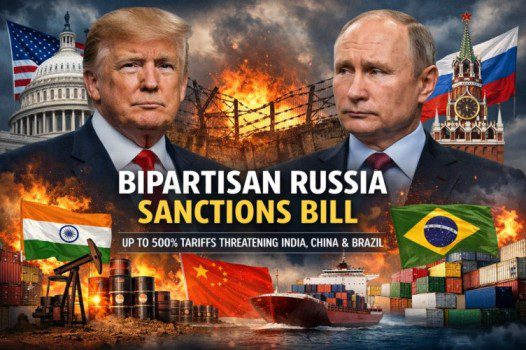
Trump Greenlights Bipartisan Russia Sanctions Bill — What It Means for Global Trade and Energy Politics
A major geopolitical and economic development is unfolding as Donald Trump has reportedly approved the advancement of a bipartisan Russia sanctions bill that could impose
tariffs of up to 500% on countries continuing to trade with Moscow.
According to Senator Lindsey Graham, the proposed legislation would target not only Russia but also its trading partners, including India, China, and Brazil, for purchasing Russian oil and uranium. The announcement has sent shockwaves through global markets and diplomatic circles.
This article explains what the bill is, why it matters, and how it could impact global trade and energy markets.
What Is the Russia Sanctions Bill?
The legislation, commonly referred to as the Graham–Blumenthal Russia Sanctions Bill, is a bipartisan effort in the U.S. Senate aimed at intensifying economic pressure on Moscow over its ongoing war in Ukraine.
Key Provisions of the Bill:
- Authorizes the U.S. president to impose extreme tariffs (up to 500%)
- Targets countries buying Russian oil, gas, or uranium
- Expands sanctions on Russian banks, energy firms, and state-linked entities
- Designed to cut off financial lifelines supporting Russia’s war effort
Importantly, this bill is not yet law. It must still pass both chambers of Congress before implementation.
Trump’s Approval: What Does “Greenlit” Mean?
Senator Lindsey Graham stated that President Trump approved moving the bill forward after discussions at the White House. A U.S. official later confirmed Trump’s backing.
This does not mean sanctions or tariffs are active yet. It means:
- The administration will not block the bill
- Congress is free to bring it to a vote
- The White House supports its intent
Trump’s backing comes even as the U.S. continues diplomatic efforts to negotiate an end to the Ukraine war.
Why India, China, and Brazil Are in Focus
The bill targets Russia’s largest energy customers, not just Russia itself.
🇮🇳 India
India has significantly increased imports of discounted Russian oil since the Ukraine conflict began. While this has helped control inflation domestically, it has also drawn scrutiny from Western nations.
If the bill passes:
- Indian exports to the U.S. could face severe tariffs
- Trade negotiations between India and the U.S. could become strained
- Energy diversification may accelerate
🇨🇳 China
China remains Russia’s largest economic partner, purchasing massive volumes of oil and gas. Sanctions targeting Chinese trade routes could escalate
U.S.–China trade tensions further.
🇧🇷 Brazil
Brazil’s exposure is smaller but still notable. As a major emerging economy, it could face indirect consequences through trade disruptions and diplomatic pressure.
What Does a 500% Tariff Really Mean?
A 500% tariff is not symbolic — it is designed to be economically prohibitive.
Effects could include:
- Near-complete shutdown of affected trade routes
- Sharp rise in consumer prices
- Supply chain disruptions across industries
- Increased global inflationary pressure
Such tariffs are intended to force policy changes, not generate revenue.
Impact on Global Energy Markets
If enacted, the bill could:
- Increase oil price volatility
- Push countries to diversify away from Russian energy
- Strengthen Middle Eastern and U.S. energy exports
- Accelerate renewable energy investments
Energy traders and institutional investors are already monitoring developments closely.
Is the Bill Guaranteed to Pass?
No. While bipartisan support is strong, several factors remain uncertain:
- Congressional scheduling and budget debates
- Senate recess timing
- Potential amendments to soften provisions
However, the fact that the bill has support from both parties and the White House significantly increases its chances.
Trump’s decision to greenlight the bipartisan Russia sanctions bill marks a potential turning point in global trade and geopolitics. If passed, it would represent one of the harshest economic measures ever proposed against both a sanctioned nation and its trading partners.
For countries like India, China, and Brazil, the coming weeks may involve critical diplomatic calculations as the world watches whether economic pressure can succeed where diplomacy has struggled.