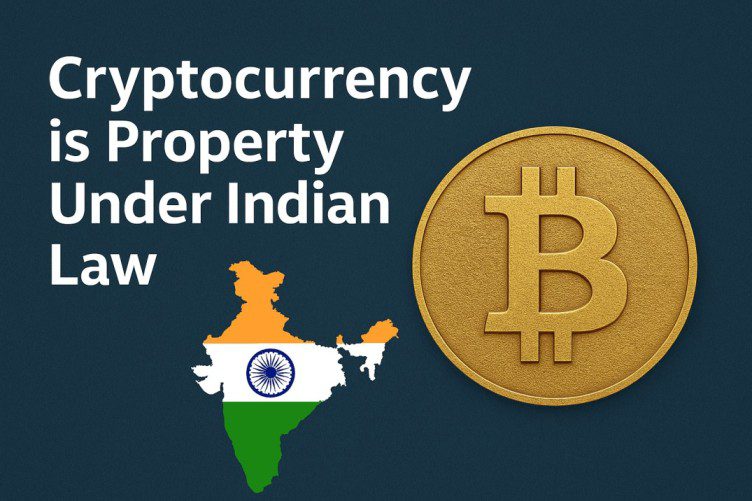
Big News for Indian Crypto Investors!
The Madras High Court has officially ruled that cryptocurrency is a form of property under Indian law — a game-changing moment for digital asset holders, exchanges, and the entire crypto industry in India.
Let’s unpack what this means, why it matters, and how it can shape the future of crypto in India.
⚖️ The Landmark Ruling
In a recent judgment, Justice N. Anand Venkatesh of the Madras High Court declared that cryptocurrency qualifies as “property capable of being held in trust.”
The case involved an investor whose 3,500+ XRP coins were frozen after a major crypto-exchange hack. When the matter reached court, the judge didn’t just decide on the dispute — he set a national precedent.
He clarified that while crypto is not legal tender or official currency, it is an asset — something people can own, trade, inherit, or hold under a trust.
“There can be no doubt that cryptocurrency is property. It is not tangible, nor is it currency. But it is property that can be enjoyed and possessed.”
— Justice N. Anand Venkatesh
🧩 What Does “Property” Mean for Crypto?
In simple terms, this ruling means your Bitcoin, Ethereum, or XRP is no longer viewed as just “virtual money.” It’s now a recognized asset, similar in principle to shares, real estate, or gold.
So if you invest in crypto:
- You can legally claim ownership.
- You can include it in wills or trusts.
- You can seek legal remedies if an exchange mishandles your funds.
Essentially, India’s legal system now sees crypto as something you own — not just use.
💡 Why This Matters
This decision gives crypto investors legal protection they didn’t have before.
Until now, if an exchange froze your account or a hack occurred, it was a grey area — regulators saw crypto as speculative, not as property. But with this ruling, courts can treat your coins like any other valuable asset.
Major implications include:
- Investor Rights: You can now pursue legal claims for recovery or damages if your crypto is lost due to negligence or fraud.
- Inheritance Planning: Your digital assets can be legally transferred to heirs, just like land or stocks.
- Trust & Custody: Exchanges may now be legally viewed as trustees responsible for safeguarding user assets.
🏛️ The Legal Context
India’s Income Tax Act (Section 2(47A)) already defines cryptocurrencies as “Virtual Digital Assets (VDAs).” The Madras High Court ruling builds on this, cementing crypto’s status as a legally recognized property class.
The Court also referred to older Supreme Court decisions that gave a broad definition of property — including anything that can be owned, transferred, or inherited — even intangible assets.
This alignment puts India on the same path as countries like the UK, Singapore, and New Zealand, where courts have similarly classified crypto as property.
⚖️ The Case That Changed It All
The case began when Rhutikumari, an investor, sued WazirX (Zanmai Labs) after her XRP coins were locked following a 2024 hack.
Her argument: the exchange had fiduciary responsibility to protect her funds.
The Court agreed — at least partly — recognizing that digital assets deserve protection under property and trust law.
This single case could influence future crypto-related legal battles in India, including:
- Bankruptcy or insolvency cases involving exchanges.
- Disputes between traders and platforms.
- Family inheritance cases involving digital wallets.
📊 The Tax and Regulatory Impact
With crypto now recognized as property, taxation and reporting rules could evolve fast.
Here’s what investors should expect:
- Capital Gains: Selling crypto may be taxed similar to selling other property or investments.
- Inheritance Tax: Transferring crypto to heirs may soon require proper valuation and documentation.
- Disclosure: Expect more emphasis on reporting digital assets under annual income filings.
While this may sound like extra paperwork, it also signals legitimacy — crypto is becoming a serious, regulated asset class in India.
✅ Pros & ❌ Cons of the Ruling
✅ Pros:
- Gives investors legal recognition and protection.
- Encourages responsible exchange governance.
- Promotes clearer taxation and compliance.
- Helps integrate crypto into mainstream financial systems.
❌ Cons:
- The ruling applies mainly to Tamil Nadu (unless upheld nationwide).
- May invite tighter regulation or higher taxes.
- Ambiguities remain around cross-border wallets and DeFi assets.
🚀 What Investors Should Do Next
Here’s your roadmap for navigating the post-ruling crypto world in India:
- Record Everything: Keep screenshots, receipts, and transaction IDs for every crypto deal.
- Choose Reliable Exchanges: Stick to FIU-registered platforms with transparent policies.
- Plan Your Estate: Mention crypto assets in wills or trusts.
- Stay Tax Compliant: Track capital gains and disclose holdings as per VDA rules.
- Educate Yourself: Follow court updates, new bills, and RBI/SEBI announcements.
🌐 The Bigger Picture
This ruling marks a turning point in India’s crypto journey. After years of regulatory uncertainty, a major court has recognized that digital assets deserve protection under existing property laws.
It’s a step toward a future where crypto isn’t feared or banned — but responsibly embraced.
Justice Venkatesh’s words signal a progressive mindset: India can regulate crypto without stifling innovation.
“We have the opportunity to design a regulatory regime that encourages innovation while protecting consumers.”
🔮 Future Outlook
- Expect more legal recognition from other High Courts — and possibly the Supreme Court.
- India might soon draft comprehensive crypto regulations inspired by this ruling.
- Exchanges will likely adopt trust-like frameworks for user funds.
- Crypto ownership may become as legitimate — and as regulated — as owning stocks.
💬
For Indian crypto enthusiasts, this isn’t just legal news — it’s validation.
It means your Bitcoin, Ethereum, or XRP isn’t just code on a blockchain; it’s your property in the eyes of the law.
Whether you’re an investor, trader, or just crypto-curious, this ruling is a signal:
👉 Crypto is here to stay — and India is finally acknowledging it.