How I Explained “Plugin-Stacked” to My 70-Year-Old Customer
Last month, one of my favorite customers — let’s call her Mrs. Mehta (as I can’t reveal her name) — called me in a panic.
“Beta, my website isn’t opening! It’s all white! Did I break something?”
She’s 70, runs a small online shop selling handmade candles, and treats her website like her baby.
She doesn’t code, doesn’t mess with tech — she just wants things to work.
And that night, they didn’t.
The 2 PM SOS Call
It was around 2 PM when she called.
Her voice was trembling.
“I just updated something called Contact Form… and now nothing opens!”
I logged in and checked.
Sure enough, her site was showing the White Screen of Death — completely blank.
After a quick 10-minute audit, I found the issue:
A contact form plugin update had clashed with her page builder and an old code snippet from the theme.
Everything just… stopped talking to each other.
That’s when I told her,
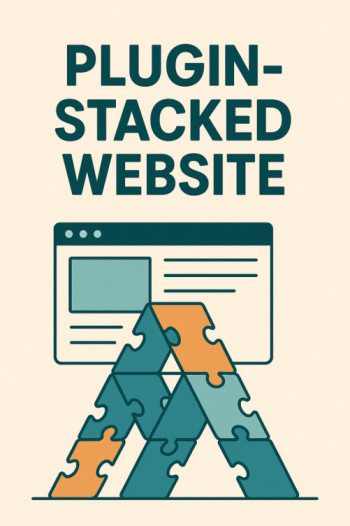
“Mrs. Mehta, your website is what we call plugin-stacked.”
Her Response Made Me Laugh
She paused for a second and said,
“Plugin what? Is that like stacking Tupperware in the kitchen?”
I laughed, “Actually, that’s exactly what it’s like!”
And then I explained it in her language.
Explaining Plugin-Stacked, Grandma Style
“Okay Mrs. Mehta, imagine your kitchen.
You have 30 different gadgets — one for slicing, one for dicing, one for peeling, one for cutting round fruits only on Thursdays…”
She laughed. “Sounds like my kitchen already.”
“Right!” I said. “Now imagine all those gadgets came from different brands, each with its own wires and plugs.
Every time you use one, it needs a different socket, a new button, and sometimes it doesn’t fit with the others.
One day, you try to turn on your coffee maker — and your toaster explodes.”
She burst out laughing.
“So that’s what happened to my website?”
“Exactly,” I said. “Your website has too many gadgets — or in tech terms, plugins. Each plugin does something, but sometimes they don’t like each other. One small update and boom — chaos.”
Why So Many Plugins Are a Problem
I told her,
“Every plugin is like a new gadget in your kitchen. It helps for a while, but it also makes things heavier, slower, and more complicated.
If one gadget breaks, sometimes it trips the whole circuit.”
She nodded slowly. “So what you’re saying is, my website has too many cooks in the kitchen?”
I smiled, “Exactly. And one of them just spilled soup on the stove.”
The Solution: Fewer Gadgets, Better Cooking
I promised her I’d rebuild her site differently — with fewer plugins and cleaner code.
No more unnecessary add-ons. No random “free” tools that cause trouble later.
I told her,
“From now on, I’ll only keep the tools that actually cook the meal. The rest — we’ll store in the drawer.”
She loved that idea.
“Simple kitchen, simple life,” she said.
The New Site: Light, Clean, and Reliable
I rebuilt her website using a custom lightweight framework — no clutter, no junk.
Now, when she clicks “Update,” she doesn’t get nervous.
Her site loads fast, runs smooth, and never crashes.
She even called me after a week, proudly saying,
“Beta, I updated everything myself today. Nothing broke!”
That call made my day.
The Lesson I Learned (and Taught)
If you’re running a website — whether you’re 25 or 75 — remember this:
Your website doesn’t need more stuff. It needs better stuff.
Every plugin you install should be essential — not just “nice to have.”
Too many plugins make your site fragile.
It becomes a house of cards — one wrong move, and it all falls apart.
Final Words (Inspired by Mrs. Mehta)
When we finished our chat, she said something that stuck with me:
“Sometimes less is more, even online.”
She’s right.
Your website should be like a clean, simple kitchen — only the tools you need, everything in its place, and no surprises when you turn on the oven.
That’s how you keep your digital home safe, stable, and stress-free.