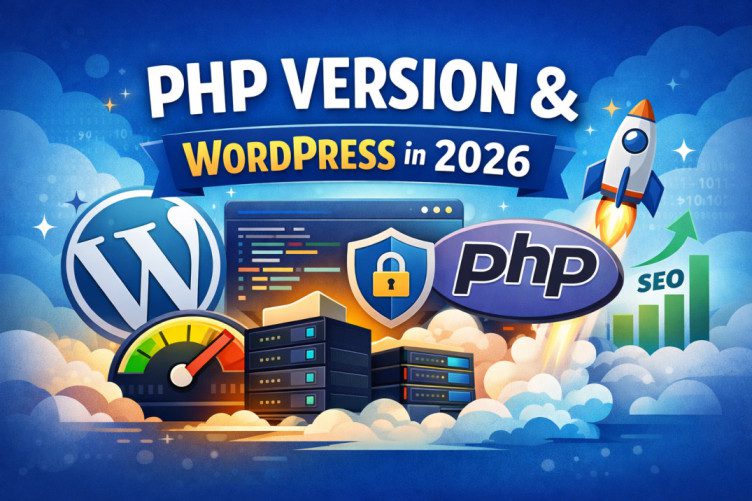
PHP Version and WordPress: Why It Matters More Than Ever in 2026
If you’re running a WordPress website in 2026, one of the most important (yet often ignored) factors is your PHP version.
Many site owners focus on themes, plugins, and SEO — but forget that WordPress runs on PHP, and using an outdated version can slow down your site, break features, and even expose you to security risks.
In this guide, we’ll break down everything you need to know about PHP versions and WordPress — in a simple, practical way.
What is PHP?
PHP (Hypertext Preprocessor) is a server-side scripting language that powers WordPress.
Every time someone visits your site:
- PHP processes the request
- Fetches data from the database
- Displays your website
👉 In short: No PHP = No WordPress
Why PHP Version Matters for WordPress
1. 🚀 Performance Boost
Newer PHP versions (like PHP 8.x):
- Execute code faster
- Reduce server load
- Improve page speed
📊 Example:
- PHP 7.4 → Good
- PHP 8.1 → Much faster
- PHP 8.2+ → Even better performance
2. 🔐 Security
Older PHP versions:
- No longer receive security updates
- Are vulnerable to attacks
Using outdated PHP is like leaving your website unlocked.
3. 🔌 Plugin & Theme Compatibility
Modern plugins and themes:
- Require PHP 8.0 or higher
- May break on older versions
If your site shows errors after installing a plugin — PHP could be the reason.
4. 📈 SEO Benefits
Google considers page speed a ranking factor.
Better PHP version = faster site = better SEO.
Recommended PHP Version for WordPress (2026)
As of 2026:
👉 Recommended: PHP 8.1 or higher
👉 Best choice: PHP 8.2 or PHP 8.3
Minimum Requirements:
- WordPress officially recommends: PHP 7.4+
- But using 7.4 is outdated now ❌
Supported vs Unsupported PHP Versions
| PHP Version | Status | Should You Use? |
|---|---|---|
| PHP 5.x | ❌ Dead | NO |
| PHP 7.0–7.3 | ❌ Ended | NO |
| PHP 7.4 | ⚠️ Risky | Avoid |
| PHP 8.0 | ⚠️ OK | Limited use |
| PHP 8.1 | ✅ Good | YES |
| PHP 8.2 | ✅ Best | Highly Recommended |
| PHP 8.3 | 🚀 Latest | Ideal |
How to Check Your PHP Version in WordPress
Method 1: WordPress Dashboard
- Go to Tools → Site Health
- Click Info → Server
- Check PHP version
Method 2: Hosting Panel
- Login to cPanel / hosting dashboard
- Look for PHP Version Manager
How to Update PHP Version Safely
⚠️ Important: Always take a backup first!
Step-by-Step:
- Backup your website
- Update WordPress core
- Update themes and plugins
- Change PHP version from hosting panel
- Test your website
Common Issues After Updating PHP
1. Plugin Conflicts
Some old plugins may stop working.
👉 Solution:
- Update or replace outdated plugins
2. Theme Errors
Old themes may not support PHP 8+
👉 Solution:
- Switch to a modern theme
3. White Screen of Death
This happens due to compatibility issues.
👉 Fix:
- Enable debug mode
- Check error logs
Best Practices for PHP and WordPress
✔ Always use latest stable PHP version
✔ Keep WordPress updated
✔ Avoid nulled or outdated plugins
✔ Test updates on staging site
✔ Choose modern hosting
Hosting Providers That Support Latest PHP
Look for hosting that offers:
- PHP 8.2 / 8.3 support
- Easy version switching
- Staging environment
Popular options:
Future of PHP and WordPress
WordPress is evolving rapidly:
- Better support for PHP 8+
- Faster execution
- Improved security
In the future, older PHP versions will be completely phased out.
👉 Staying updated is no longer optional — it’s essential.
Conclusion
Your PHP version is the engine behind your WordPress site.
Using the latest PHP:
- Improves speed ⚡
- Boosts security 🔐
- Ensures compatibility 🔌
- Helps SEO 📈
👉 If you haven’t checked your PHP version yet — now is the time.