US Government Shutdown 2025: Why America Ran Out of Money and What It Means for You
The U.S. government officially shut down on October 1, 2025, after lawmakers failed to pass a funding bill before the deadline. This marks the first federal shutdown since 2018–19, and its effects are already rippling through households, markets, and national services.
This blog dives into why the shutdown happened, who it affects, and what comes next—with stories, facts, and expert quotes to give a real human touch.
🚨 What Does a Government Shutdown Mean?
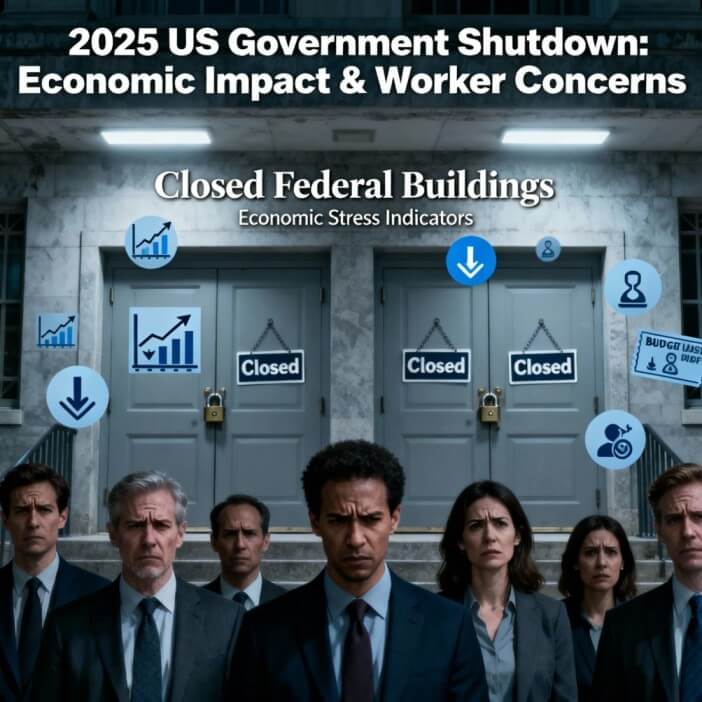
When Congress doesn’t approve funding for federal agencies, most “non-essential” services stop immediately. Federal employees are furloughed, national parks close, research stalls, and even Wall Street regulators scale back.
“A shutdown is not just a Washington drama—it’s families missing paychecks, seniors waiting longer for benefits, and small businesses losing contracts,” said Senator Chuck Schumer.
Essential services like military, Social Security checks, and air traffic control continue, but often without pay for workers until funding resumes.
🏛️ Why Did the US Government Shut Down in 2025?
The 2025 shutdown isn’t just about numbers—it’s about politics and priorities.
- Healthcare subsidies: Democrats pushed to extend Affordable Care Act (ACA) credits, while Republicans demanded cuts.
- Foreign aid: Funding for overseas programs became a sticking point.
- Policy riders: Lawmakers attached unrelated demands to the funding bill, which killed compromise.
As midnight struck, the Senate deadlocked, and America woke up to a government on pause.
“This is political brinkmanship at its worst. Ordinary Americans are being held hostage,” said a federal union representative.
👨👩👧 The Human Side: Federal Workers Hit First
Over 750,000 federal employees face furloughs or working without pay. That means rent, groceries, and bills suddenly become stressful questions for middle-class families.
One TSA officer told reporters:
“I’ll still go to work tomorrow, but I don’t know when I’ll see my paycheck. Try telling my landlord that.”
Health agencies are also hit hard:
- CDC expects 64% of staff furloughed (CDC official site).
- NIH may cut 75% of its workforce (NIH).
- Nearly half of health agency employees face temporary layoffs.
That means delayed disease tracking, stalled research, and fewer food safety inspections—problems that hit every American, not just government workers.
🌍 What Shuts Down and What Stays Open?
Here’s a simple breakdown of what you can expect during the US government shutdown 2025:
✅ Stays Open
- Social Security, Medicare, Medicaid
- Military & border security
- Air traffic control & law enforcement
- USPS (Postal Service)
❌ Closes or Delays
- National parks & museums
- Federal research & health programs
- New Social Security enrollments
- IRS processing, audits, refunds
- Regulatory approvals (SEC, FDA, EPA)
“When the government shuts down, America slows down,” explained a Washington Post editorial.
📉 Economic Consequences of the 2025 Shutdown
Shutdowns don’t just hit federal workers—they ripple through the economy.
- The 2018–19 shutdown cost $11 billion (with $3 billion permanently lost) (CBO Report).
- The 2025 shutdown could be worse, with Wall Street regulators like the SEC cutting 90% of staff, leaving markets exposed (SEC).
- Small businesses relying on federal contracts may not get paid.
- Tourism crashes as parks and monuments close, hitting local economies.
“Markets hate uncertainty—and nothing is more uncertain than Washington refusing to pay its bills,” said an economist at Bloomberg.
⚖️ Political Fallout: Who Gets the Blame?
Each side blames the other, but Americans mainly see dysfunction. With elections looming, neither party wants to shoulder responsibility.
- Republicans accuse Democrats of reckless spending.
- Democrats accuse Republicans of holding the government hostage for ideology.
“Voters don’t care whose fault it is—they just want their government to work,” said political analyst Amy Walters.
If the shutdown drags on, expect public frustration to boil over. In past shutdowns, approval ratings for both parties sank.
🔮 How Will the Shutdown End?
Historically, shutdowns end when one side gives in to pressure or both agree on a temporary funding bill.
- Short shutdowns last days.
- Long ones, like the 2018–19 record 35-day closure, drag on for weeks.
Possible solutions include:
- A continuing resolution (short-term funding patch)
- A grand bargain on healthcare & foreign aid funding
- Or even reforms like automatic funding extensions to avoid shutdowns in the future.
✅ A Moment of Reckoning
The 2025 US government shutdown is more than a budget fight. It’s a test of how political gridlock in Washington can disrupt ordinary lives.
Families without paychecks, delayed healthcare research, halted markets—this is the human cost of dysfunction.
“The government didn’t just shut down. It shut down hope, stability, and trust in our leaders,” said a furloughed federal worker in Maryland.
The question now: how long will America endure before Congress acts?