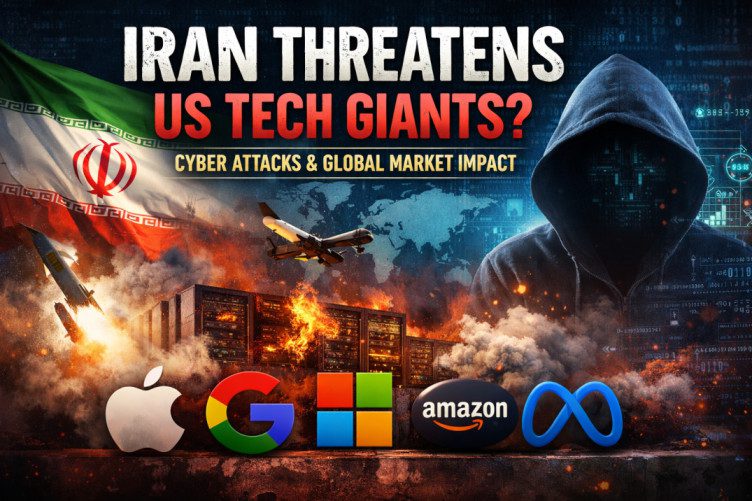
Iran Threatens US Tech Giants? Truth, Risks & What It Means for Global Markets
In April 2026, geopolitical tensions took a dramatic turn when Iran issued direct threats against major US technology companies. What initially sounded like propaganda quickly escalated into credible military and cyber risk scenarios, raising alarm across global markets.
But how real is this threat?
Which tech companies are involved?
And what does it mean for investors, businesses, and the global economy?
Let’s break it down.
What Happened: The Core Threat
Iran’s Islamic Revolutionary Guard Corps (IRGC) publicly declared that US tech companies would be considered “legitimate targets” if the conflict with the US and Israel escalates further.
Key Points:
- Over 17–18 major US tech and industrial companies were named.
- Iran claims these companies support AI-driven military operations and surveillance.
- The warning included evacuation notices for employees near offices in the Middle East.
- Targets are primarily regional infrastructure (data centers, offices) — not necessarily mainland US.
Which Tech Giants Are on the Target List?
Iran’s list includes some of the biggest names in global technology:
Big Tech & Cloud
AI, Chips & Data Companies
Infrastructure & Others
These companies are accused of enabling AI targeting, cloud computing, and surveillance systems used in military operations.
Which Tech Infrastructure Has Already Been Attacked?
This is where things move from threat → action.
Confirmed / Reported Incidents:
1. Amazon Data Centers (AWS)
- Drone strikes reportedly targeted AWS data centers in Bahrain and UAE.
- These are critical cloud hubs powering apps, banks, and governments.
2. Oracle Data Center (Dubai)
- Iran claimed it targeted an Oracle data center in Dubai.
- However, UAE authorities disputed the extent of damage.
3. Broader Cyber Activity (Unverified but Active)
- Pro-Iranian hacker groups claimed:
- Data breaches
- Disruption attempts
- Some claims remain unverified, but cybersecurity experts warn they are part of psychological and hybrid warfare.
Why Is Iran Targeting Tech Companies?
This is not random — it reflects a new kind of warfare.
1. AI Warfare Accusations
Iran alleges:
- AI tools from US firms are used to track and target leaders
- Cloud systems enable real-time intelligence
2. Tech = Modern Military Backbone
Today’s wars rely on:
- Cloud computing (AWS, Azure)
- Satellite internet (Starlink)
- AI analytics (Palantir)
This makes tech companies indirect participants in conflict.
3. Economic Pressure Strategy
Targeting Big Tech:
- Hits global markets
- Creates investor panic
- Pressures the US indirectly
Truth vs Hype: How Serious Is This?
What’s Real:
✔ Official threats from Iran’s military
✔ Named target list of major companies
✔ Initial attacks on cloud infrastructure
What’s Uncertain:
⚠ Scale of actual damage
⚠ Verification of cyberattacks
⚠ Whether attacks will expand globally
Expert View:
Even unverified attacks matter because they:
- Create fear
- Disrupt operations
- Increase cybersecurity costs
Impact on Global Markets
1. Tech Stocks Volatility
- Big Tech may face:
- Short-term dips
- Risk premiums
- Cloud providers are especially exposed
2. Oil & Energy Surge
- Conflict → rising oil prices
- Impacts inflation worldwide
3. Supply Chain Risks
- Chips (Nvidia, Intel)
- Cloud infrastructure
- Data routing via Middle East
What It Means for India & Retail Investors
Risks:
- US tech-heavy portfolios → volatility
- Crypto markets → sudden swings
- IT sector sentiment impact
Opportunities:
- Cybersecurity stocks may benefit
- Defense & AI firms could see growth
- Long-term Big Tech remains fundamentally strong
The Bigger Picture: War Has Changed
👉 Wars are no longer just fought with missiles — but with data, AI, and cloud infrastructure.
Tech companies are now:
- Strategic assets
- Political targets
- Economic pressure points
Conclusion
Iran’s threat to US tech giants is not just rhetoric — it’s a signal of a new era of hybrid warfare.
While full-scale attacks on global tech infrastructure remain unlikely (for now), the risks are real enough to:
- Shake markets
- Increase cybersecurity threats
- Redefine how wars are fought
For investors and businesses, the key is simple:
👉 Stay informed, diversify risk, and watch geopolitical signals closely.