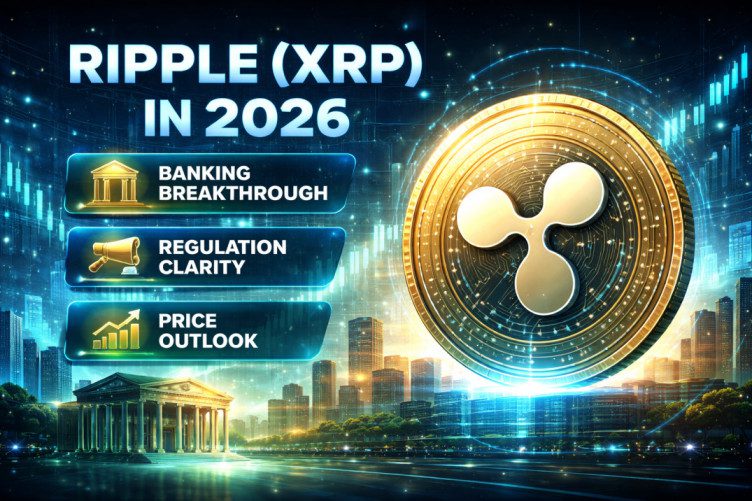
Ripple (XRP) in 2026: Regulation Breakthrough, Banking Ambitions & Market Reality
The year 2026 is shaping up to be one of the most defining periods in the history of Ripple and its native token XRP. After years of legal uncertainty, regulatory battles, and market volatility, Ripple is now standing at a critical crossroads—caught between massive institutional opportunity and short-term market hesitation.
In this blog, we’ll break down the current scenario of Ripple, covering regulation, banking integration, price movement, and what lies ahead.
🏦 Ripple’s Biggest Breakthrough: Moving Toward a Bank
One of the biggest developments right now is Ripple’s move toward becoming a regulated financial institution.
- On April 1, 2026, a new rule by the U.S. Office of the Comptroller of the Currency (OCC) came into effect
- This rule allows national trust banks to handle digital assets like crypto custody
- Ripple already has conditional approval for a National Trust Bank charter (see Ripple official site)
👉 What this means:
- Ripple could soon operate like a federally regulated crypto bank
- It can offer:
- Crypto custody
- Payment infrastructure
- Institutional-grade services
This is a huge shift from being just a blockchain company to becoming part of the traditional financial system.
👉 But there’s a catch:
- Ripple still needs to complete:
- Compliance checks
- AML/KYC requirements
- Capital and risk controls
So, the transition is not fully complete yet.
⚖️ Legal Clarity Finally Achieved
Another major milestone:
- XRP has now been officially classified as a digital commodity (not a security) (context from U.S. SEC)
👉 Why this matters:
- Ends years of uncertainty from the SEC lawsuit
- Opens doors for:
- Institutional investment
- ETF growth
- Wider adoption
However, despite this positive development…
👉 The price did not explode.
📉 XRP Price: Why It’s Still Struggling
As of early April 2026:
- XRP is trading around
$1.30–$1.35 (check live price on CoinMarketCap) - Down over 60% from its 2025 highs (~$3.6)
So why isn’t XRP pumping?
1. 🌍 Macro Economic Pressure
- High oil prices
- Fewer interest rate cuts
- Weak crypto market sentiment
👉 These factors are dragging down all altcoins, not just XRP
2. 📊 Weak Technical Structure
- XRP is stuck in a consolidation range (~$1.26–$1.57)
- Resistance is strong near $1.50
👉 This means:
- Buyers are not in full control yet
- Market is waiting for a strong catalyst
3. 🏦 Institutional Adoption Still Early
Even though regulation is clear:
- Real institutional money hasn’t fully entered yet
- ETFs exist, but mostly retail-driven
👉 Result: Good news ≠ immediate price growth
🔗 Real Utility: Ripple’s Core Strength
Unlike many cryptocurrencies, Ripple has a
clear real-world use case:
🌐 Cross-Border Payments (ODL)
- XRP is used as a bridge currency for international transfers
(learn more: Ripple ODL) - Enables:
- Faster transactions
- Lower fees than traditional banking
👉 With banking integration:
- XRP could become part of global payment rails
📊 Supply & Ecosystem Developments
Recent factors influencing XRP:
- Monthly escrow unlocks (1B XRP) continue to impact supply
- Ongoing improvements in:
- XRP Ledger (XRPL)
- Privacy features
- Institutional infrastructure
👉 These strengthen long-term fundamentals, but:
- Short-term price impact remains limited
🔮 XRP Price Outlook (2026)
Analysts are divided:
📈 Bullish Scenario
- $2.25 – $2.80 by end of 2026
- Driven by:
- Banking approval
- Institutional inflows
- ETF expansion
📉 Bearish Scenario
- Could drop toward $1.20 or even $0.50 (extreme case)
⚖️ Most Realistic Scenario
- Sideways movement between:
- $1.20 – $1.70 (short-term)
- Breakout depends on:
- Final bank approval
- Macro recovery
- Institutional demand
🧠Where Ripple Stands Today
Ripple in 2026 is in a transitional phase:
✅ Strengths
- Regulatory clarity achieved
- Banking integration in progress
- Strong real-world use case
❌ Challenges
- Weak market sentiment
- Delayed institutional inflow
- Price not reflecting fundamentals
💡 Conclusion
Ripple is no longer fighting for survival—it’s preparing for
mainstream financial integration.
But here’s the reality:
👉 The fundamentals have improved faster than the price.
This creates a situation where:
- Short-term traders feel frustrated
- Long-term investors see opportunity