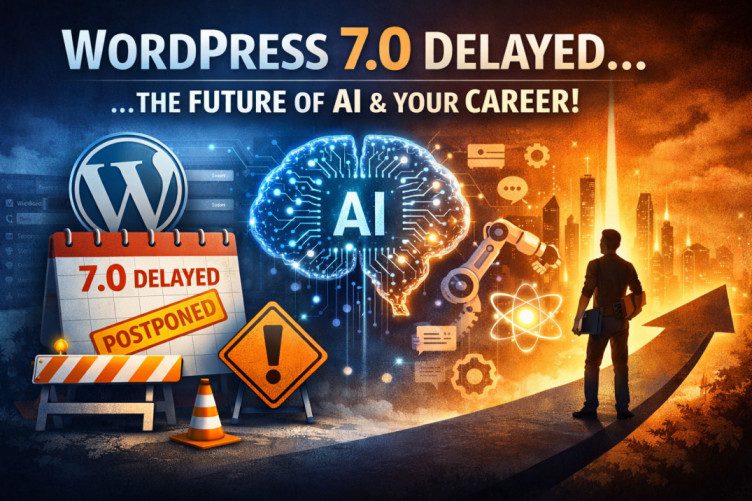
WordPress 7.0 Delay: A Strategic Move Toward Stability, AI, and the Future of Web Development
The WordPress ecosystem recently saw a significant update: WordPress 7.0 has been delayed. At first glance, delays in major software releases can trigger concern, especially for developers, businesses, and agencies relying on predictable release cycles. But this isn’t a red flag—it’s a calculated, forward-thinking decision that reflects the evolving complexity of modern web platforms.
In this blog, we’ll break down why WordPress 7.0 is delayed, what’s changing under the hood, and why this move actually signals a stronger future for WordPress.
🚀 What Was Expected from WordPress 7.0?
WordPress 7.0 isn’t just another incremental update—it represents a major leap in how content is created and managed. Some of the anticipated features include:
- Real-time collaboration (similar to Google Docs)
- Enhanced block editor capabilities
- Improved performance and scalability
- Foundation for AI-assisted content workflows
This version aims to redefine WordPress from a traditional CMS into a modern, collaborative publishing platform.
⏳ Why Was WordPress 7.0 Delayed?
The delay primarily revolves around one major feature:
🧩 Real-Time Collaboration
Introducing real-time collaboration is not a simple UI update—it requires deep architectural changes, including:
- Database structure modifications
- Conflict resolution systems (multiple users editing simultaneously)
- Synchronization mechanisms
- Backward compatibility with plugins and themes
These changes significantly increase complexity. Releasing too early could result in:
- Site instability
- Plugin conflicts
- Data inconsistencies
- Poor user experience
Rather than rushing, the WordPress core team chose to prioritize stability over speed. You can follow ongoing updates via the WordPress Core development blog.
🛠️ Stability Over Speed: A Smart Move
“Ship when it’s ready—not when the calendar says so.”
Here’s why that matters:
1. Protecting the Ecosystem
WordPress powers over 40% of the web. Even a minor instability can affect millions of websites. Source: W3Techs.
2. Plugin Compatibility
Thousands of plugins rely on WordPress core behavior. Sudden structural changes without enough testing could break critical functionality. Learn more at the WordPress Developer Resources.
3. User Trust
Frequent bugs in a major release can damage WordPress’s reputation. Stability ensures long-term trust.
🔍 What This Means for Developers & Users
👨💻 For Developers
- More time to prepare for upcoming changes
- Opportunity to test plugins/themes against new architecture
- Reduced risk of emergency fixes post-release
🧑💼 For Businesses
- No immediate disruption
- Continued reliability of existing setups
- Better long-term performance once 7.0 launches
🧠 For Learners (Like You)
This is actually a huge opportunity:
- Learn about real-time systems
- Understand scalable architecture
- Explore how modern editors work internally
These are high-value skills for AI and modern development roles.
🤖 The Bigger Picture: WordPress Is Evolving
This delay highlights something deeper:
WordPress is no longer just a blogging platform.
It’s evolving into:
- A collaborative content platform
- A system ready for AI integration
- A more application-like experience
Future possibilities include:
- AI-assisted writing
- Smart layout suggestions
- Automated SEO optimization (see SEO basics)
- Collaborative publishing workflows
⚖️ Is This Delay a Problem?
Short answer: No.
In fact, it’s a sign of maturity.
A rushed release could have caused:
- Broken websites
- Developer frustration
- Emergency patches
Instead, this delay ensures:
- Better performance
- Stronger foundation
- Smoother adoption
📅 When Can We Expect WordPress 7.0?
While no exact date is finalized, the delay is expected to be a matter of weeks, not months. Keep an eye on the official release announcements.
The focus is on completing:
- Extensive testing
- Performance optimization
- Ecosystem readiness
🧾 Final Thoughts
The delay of WordPress 7.0 is not a setback—it’s a strategic pause to build something robust and future-ready.
In a world where software is becoming increasingly complex, taking time to ensure stability is a competitive advantage.
For developers, creators, and businesses alike, this means one thing:
When WordPress 7.0 finally arrives, it won’t just be new—it will be ready.