Google Wants Search to Become More Action-Driven: What It Means for Users, SEO, and the Future of the Web
For more than two decades, Google Search has been built around a simple idea: type a query, get a list of links, and choose where to go next. But that model is rapidly changing.
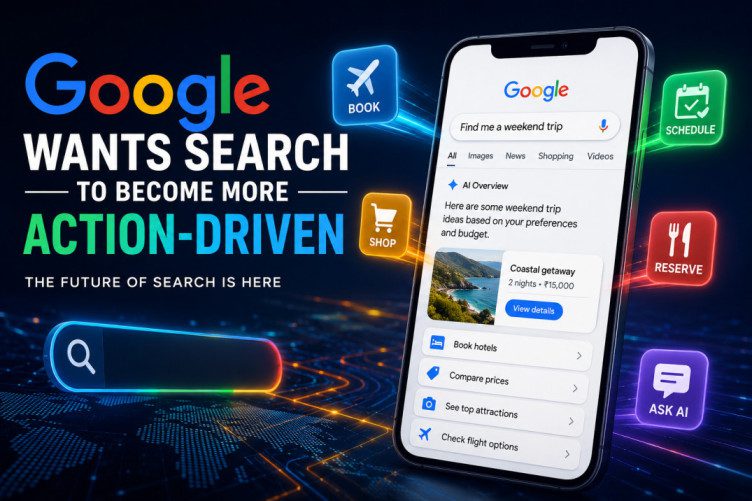
Today, Google is pushing Search toward a far more action-driven experience powered by artificial intelligence. Instead of only showing information, Google increasingly wants Search to do things for users — summarize answers, book appointments, compare products, generate plans, automate tasks, and even complete actions without users visiting multiple websites.
This shift could become one of the biggest transformations in internet history.
In this article, we’ll explore:
- What “action-driven search” actually means
- Why Google is moving in this direction
- How AI is reshaping Search
- The impact on SEO, publishers, and businesses
- What website owners should do next
- The future of browsing in an AI-first world
What Does “Action-Driven Search” Mean?
Traditional search works like a digital library. You search for something, and Google gives you links to websites containing possible answers.
Action-driven search goes beyond that.
Instead of simply helping users find information, Google wants Search to help users complete tasks.
Examples include:
- Booking flights directly from Search
- Making restaurant reservations
- Summarizing long articles instantly
- Comparing products automatically
- Generating travel itineraries
- Writing emails or responses
- Shopping through AI recommendations
- Handling multi-step tasks with AI assistants
In other words, Search is evolving from a search engine into an AI assistant platform.
Why Google Is Changing Search
The internet has changed dramatically since Google launched in 1998.
Users now expect:
- Faster answers
- Less clicking
- Personalized experiences
- Conversational interfaces
- AI-generated assistance
The rise of AI tools like OpenAI’s ChatGPT and AI-powered assistants has accelerated this trend. Millions of users now ask conversational questions instead of typing keyword-style searches.
Google understands that the future of search is not just about indexing pages — it’s about helping users accomplish goals instantly.
That’s why Google has introduced:
- AI Overviews
- Gemini AI integration
- Search Generative Experience (SGE)
- Multimodal search
- AI shopping tools
- AI trip planning
- Conversational search features
The company wants Search to become more interactive, predictive, and task-oriented.
AI Is Becoming the Core of Google Search
Google’s AI transformation is heavily connected to Google Gemini, the company’s next-generation AI system.
Instead of users performing multiple searches like:
- “Best budget phones”
- “iPhone vs Samsung”
- “Best battery phone”
- “Where to buy”
Google increasingly wants AI to handle the entire workflow in one experience.
For example, a user could ask:
“Find me the best smartphone under $500 with a strong battery and good camera.”
An AI-powered Search experience could:
- Analyze products
- Compare specifications
- Read reviews
- Recommend options
- Show local availability
- Complete the purchase
All inside Search.
This dramatically reduces friction for users.
Search Is Becoming Conversational
Another major change is the shift from keyword-based search to conversational search.
Instead of typing:
“best SEO tools 2026”
Users may ask:
“What are the best SEO tools for a small business with a low budget?”
AI allows Google to understand context, intent, follow-up questions, and natural language much better than traditional search algorithms.
This means Search increasingly behaves like a conversation rather than a static list of blue links.
What This Means for SEO
This shift could completely reshape SEO.
For years, SEO was heavily focused on:
- Ranking pages
- Optimizing keywords
- Building backlinks
- Increasing clicks
- Driving organic traffic
But AI-powered search changes the equation.
If Google directly answers questions inside Search, users may never visit websites.
This creates major challenges for publishers and content creators.
The Rise of Zero-Click Searches
Google has already been moving toward zero-click searches for years.
Examples include:
- Featured snippets
- Knowledge panels
- Instant answers
- Weather widgets
- Currency conversions
- AI Overviews
Now AI takes this much further by summarizing entire topics.
Websites that relied heavily on informational traffic may see declining clicks even if their content powers AI answers behind the scenes.
Content Quality Matters More Than Ever
Even though AI changes search behavior, high-quality content remains essential.
AI systems still need reliable sources.
Google increasingly rewards:
- Original reporting
- Expert insights
- Unique opinions
- Real experience
- High-authority content
- Trustworthy information
Thin AI-generated articles with no value may struggle to perform in future search ecosystems.
This aligns with Google’s growing emphasis on:
- E-E-A-T (Experience, Expertise, Authoritativeness, Trustworthiness)
- Helpful content
- First-hand knowledge
- User satisfaction
Website Owners Must Adapt
Website owners and marketers should prepare for major SEO changes.
1. Focus on Topical Authority
Instead of chasing random keywords, build deep expertise in a niche.
Google increasingly values websites that demonstrate authority across an entire subject area.
2. Create Experience-Based Content
Personal experiences, case studies, original research, and unique insights are becoming more valuable because AI cannot easily replicate them.
Examples:
- Real product testing
- Case studies
- Tutorials
- Interviews
- Industry analysis
- Expert commentary
3. Optimize for AI Discovery
Future SEO may focus less on rankings and more on becoming a trusted AI source.
That means:
- Clear structure
- Accurate information
- Schema markup
- Strong authority
- Updated content
- Credible sourcing
4. Build a Brand Beyond Google
As AI reduces organic clicks, businesses should diversify traffic sources:
- Email newsletters
- YouTube
- Social media
- Communities
- Direct audiences
- Podcasts
Strong brands will survive AI-driven search shifts better than anonymous websites.
The Future of Search Could Be Agent-Based
Google’s long-term vision likely involves AI “agents” that can perform tasks autonomously.
Imagine telling Search:
“Plan my weekend trip under ₹20,000 with good hotels and vegetarian food.”
AI could:
- Research destinations
- Compare prices
- Book hotels
- Create itineraries
- Recommend attractions
- Reserve restaurants
This turns Search into a digital assistant capable of executing complex workflows.
The future may involve fewer searches and more AI-managed actions.
Will Websites Lose Traffic?
Possibly — especially websites built purely around informational content.
But not all traffic will disappear.
People still want:
- Trusted brands
- Human perspectives
- Detailed tutorials
- Community discussions
- Reviews
- Expert opinions
- Entertainment
- Interactive experiences
The internet will evolve rather than vanish.
Publishers who adapt early could still thrive in an AI-first ecosystem.
Opportunities Created by AI Search
Despite concerns, action-driven search also creates opportunities.
Businesses can benefit from:
- Faster customer journeys
- Better personalization
- AI-powered commerce
- Increased conversions
- Smarter discovery systems
- Enhanced local search experiences
Creators who embrace AI tools can produce better content faster while focusing on creativity and expertise.
Google’s Biggest Challenge: Balancing AI and the Open Web
One major issue remains:
Google depends on the open web for information.
If publishers lose traffic and revenue because AI answers everything directly, fewer creators may produce quality content.
Google must balance:
- User convenience
- Publisher sustainability
- AI efficiency
- Healthy web ecosystems
This challenge may define the next decade of the internet.
Final Thoughts
Google’s push toward action-driven search marks a historic turning point for the web.
Search is evolving from a tool that helps users find websites into a system that helps users complete tasks.
AI is changing how people discover information, shop online, plan trips, create content, and interact with the internet itself.
For SEO professionals, publishers, and businesses, adaptation is no longer optional.
The future belongs to websites and brands that provide:
- Real expertise
- Unique value
- Human insight
- Strong trust
- High-quality experiences
The era of AI-powered search has already begun — and it will reshape the internet faster than most people expect.