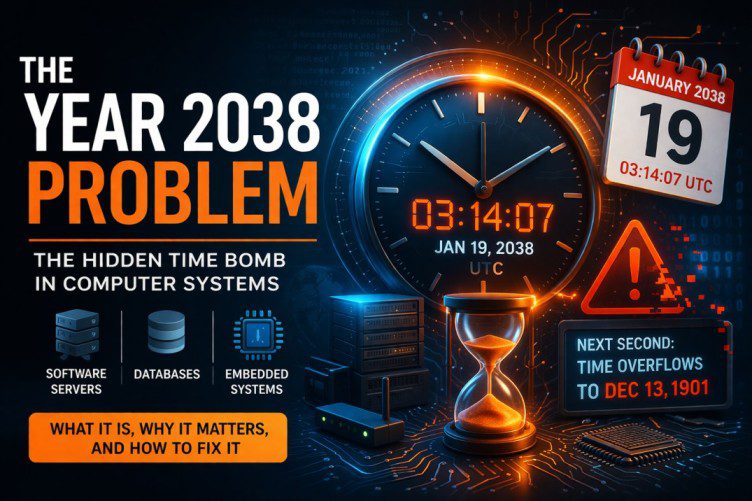
Year 2038 Problem (Y2K38): What It Is, Why It Matters & How to Fix It
The Year 2038 Problem, also known as Y2K38, is a hidden time bomb in older computer systems. While it may sound like a distant issue, it has the potential to disrupt software, servers, databases, and embedded systems worldwide.
But don’t worry—this guide will explain everything in a simple and practical way, even if you’re not a tech expert.
📌 What Is the Year 2038 Problem?
The Year 2038 Problem occurs because many systems store time using a format called Unix time.
👉 Unix time counts the number of seconds since:
📅 January 1, 1970 (UTC)
In older systems, this value is stored as a 32-bit signed integer.
⏳ Why Does the Year 2038 Bug Happen?
A 32-bit signed integer has a maximum value of:
👉 2,147,483,647 seconds
This limit corresponds to:
📅 January 19, 2038, at 03:14:07 UTC
At the very next second:
💥 The value overflows and becomes negative
➡️ The system jumps back to December 13, 1901
⚠️ What Problems Can It Cause?
If systems are not updated, the Year 2038 bug can lead to:
🔴 Critical Issues
- System crashes or unexpected failures
- Incorrect timestamps in logs and transactions
- Broken scheduling systems (cron jobs, automation)
- Financial miscalculations
- Data corruption in databases
- Security vulnerabilities
🧩 Real-World Impact
Imagine:
- A bank recording transactions in 1901
- A server rejecting SSL certificates due to wrong dates
- Automated systems failing silently
🖥️ Which Systems Are at Risk?
Not all devices are affected. The risk depends on the system architecture.
🔴 High-Risk Systems
- 32-bit Linux/Unix systems
- Embedded systems (ATMs, IoT devices, routers)
- Legacy enterprise software
- Older file systems and databases
🟢 Low-Risk Systems
- Modern 64-bit operating systems
- Cloud platforms ( AWS, Google Cloud, Azure)
- Updated smartphones and laptops
🔧 How to Fix the Year 2038 Problem
The solution is straightforward:
✅ Use 64-bit Time Representation
Modern systems use 64-bit integers to store time.
👉 This increases the limit to billions of years—effectively solving the problem.
✔️ Practical Fixes for Developers & Businesses
- Upgrade to 64-bit operating systems
- Update programming languages and libraries
- Replace legacy hardware and firmware
- Audit databases for timestamp limitations
- Test applications with future dates (post-2038)
🌐 Year 2038 Problem in WordPress (Important for You)
If you run a WordPress website, here’s what you should know:
🧠 Are WordPress Sites Affected?
👉 Generally, No—if your environment is modern.
But issues may arise if:
- Your hosting uses outdated 32-bit servers
- You use old plugins/themes
- Your database stores timestamps in legacy formats
🔍 Best Practices for WordPress Users
- Use reliable hosting (64-bit infrastructure)
- Keep WordPress core updated
- Avoid outdated or nulled plugins
- Regularly update PHP (8.x recommended)
- Test scheduled posts and cron jobs
💡 Since you’re working with themes and plugins, this is especially important for long-term stability.
🔁 Year 2038 vs Y2K Bug
| Feature | Y2K Bug | Year 2038 Problem |
|---|---|---|
| Cause | 2-digit year format | 32-bit integer overflow |
| Impact Year | 2000 | 2038 |
| Fix | Update date format | Upgrade to 64-bit |
| Severity | High (global panic) | Moderate (controlled risk) |
🧠 Easy Analogy
Think of a digital counter that can only count up to 9999.
Once it hits the limit, it resets to 0000.
👉 That’s exactly what happens in 2038—time “wraps around.”
🔮 Future Outlook
The good news:
✅ Most systems today are already 64-bit
✅ Major companies have patched their infrastructure
✅ Cloud computing reduces risk significantly
However:
⚠️ Legacy systems and embedded devices still pose a risk
⚠️ Some industries (banking, telecom, defense) must stay alert
💡 Pro Tips for Future-Proof Systems
- Always design software with scalability in mind
- Avoid hardcoded date limits
- Use modern frameworks and APIs
- Regularly audit system dependencies
📝 Conclusion
The Year 2038 Problem is a classic example of how small technical limitations can create big future risks.
But unlike the Y2K scare, we’re already prepared.
👉 As long as you:
- Keep systems updated
- Avoid outdated tech
- Use modern infrastructure
You’ll be completely safe 👍