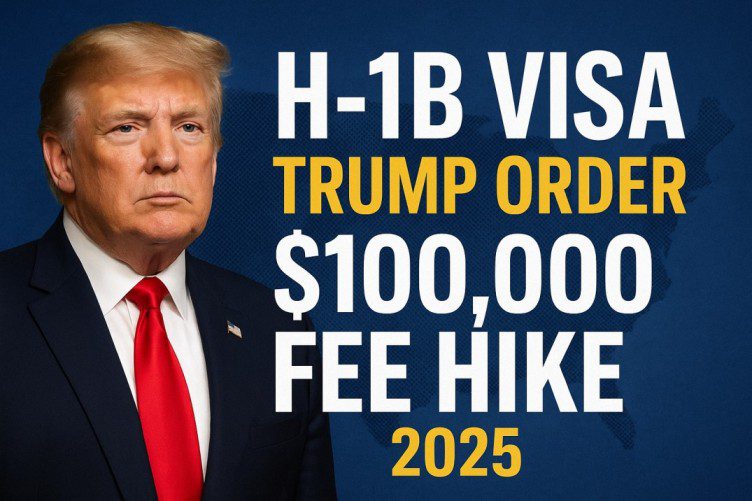
H-1B Visa Fee Hike: What Trump’s New $100,000 Fee Means for You
🌍 Introduction: A Game-Changer for Global Talent
The H-1B visa has been a dream gateway for skilled professionals, especially from countries like India, China, and the Philippines, to work in the United States.
For decades, it fueled the growth of Silicon Valley, bringing in engineers, data scientists, and other tech experts. But on September 19, 2025, former President Donald Trump signed a new order that could change everything.
Starting September 21, 2025, employers will now have to pay a whopping $100,000 per year per H-1B visa holder.
“This isn’t just a fee hike — it’s a complete reset of how companies hire global talent,” says Rajesh, an IT consultant from Bangalore whose H-1B visa renewal is coming up.
But what does this mean for employers, applicants, and the U.S. job market? Let’s dive deep.
💼 What Is the H-1B Visa?
The H-1B visa allows U.S. companies to hire foreign workers in specialty occupations like:
- Software development
- Engineering
- Data science
- Finance
- Medical and research roles
It’s valid for 3 years initially and can be extended up to 6 years.
Every year, there are 85,000 new H-1B slots, including 20,000 reserved for U.S. master’s degree holders.
Traditionally, fees for an H-1B petition ranged from $1,710 to around $6,460, depending on the employer size and type.
The new $100,000 annual fee is unprecedented — a 20x increase over current costs.
📝 What Trump’s New Order Says
Here’s a quick breakdown of the proclamation:
1. $100,000 Annual Fee
Employers must pay $100,000 annually per H-1B worker they sponsor.
This applies to new visa petitions starting September 21, 2025.
2. Limited Duration
The proclamation is temporary for 12 months, but can be extended.
3. National Interest Exemptions
Some roles may be exempt if they’re considered critical to U.S. security or economy, like healthcare workers or defense contractors.
4. Higher Wage Rules Coming
The Department of Labor will revise the prevailing wage levels, meaning companies must pay foreign workers at or above U.S. worker salaries.
5. “Gold Card” Visa Option
Alongside this fee hike, Trump introduced a Gold Card visa, granting permanent residency for foreign investors who bring at least $1 million into the U.S.
⚖️ Pros of the H-1B Fee Hike
While controversial, some positives exist:
1. Higher Wages for U.S. Workers
Companies can no longer rely on cheap labor. This could push salaries up, benefiting local workers.
2. Reduces H-1B Abuse
Some outsourcing firms flood the lottery with applications, then replace U.S. workers with lower-paid foreign hires.
The new fee makes this much harder.
3. Selective Hiring for High-Value Roles
Only companies with critical hiring needs will be willing to pay, ensuring H-1B visas are used for specialized, high-impact jobs.
4. Encourages Local Talent Development
Firms may now invest in upskilling American workers instead of outsourcing.
⚠️ Cons of the H-1B Fee Hike
Here’s why many are raising red flags:
1. Huge Financial Burden on Companies
Small businesses and startups can’t afford $100,000 per visa.
This kills innovation and makes it harder for them to hire top talent.
2. Fewer Job Opportunities for Foreign Talent
Thousands of international professionals — especially from India and China — may lose opportunities to work in the U.S.
“I’ve been preparing for three years for my H-1B. Now my company says they might cancel my offer,” says Anjali, a software engineer from Pune.
3. Risk of U.S. Companies Moving Abroad
Some companies may shift jobs to countries like Canada, Ireland, or India, leading to job outsourcing instead of job protection.
4. Legal Challenges and Confusion
Experts question whether Trump can unilaterally impose this fee without Congress.
Legal battles could cause months of uncertainty for employers and applicants.
🌐 Global Ripple Effect
This policy will have major consequences worldwide, especially in tech hubs like:
- Bangalore, India – home to thousands of H-1B hopefuls.
- Shenzhen, China – where tech manufacturing talent originates.
- Toronto, Canada – which may see a surge in skilled worker migration.
Countries like Canada and Australia, which have friendlier immigration policies, could benefit massively as talent diverted from the U.S. seeks alternatives.
🔎 What Employers and Applicants Should Do Now
For Employers
- Budget carefully: Decide which hires are worth the $100,000 fee.
- Look for exemptions: Some roles may qualify for national interest waivers.
- Explore alternatives: Consider O-1, L-1, or EB-1 visas for highly skilled individuals.
For Applicants
- Stay updated: Follow USCIS and employer updates closely.
- Consider Canada or EU programs as backup plans.
- Prepare documentation early to avoid delays.
📊 Quick Comparison: Before vs. After
| Feature | Before Sept 2025 | After Sept 2025 |
|---|---|---|
| H-1B Visa Fee | $1,710 – $6,460 | $100,000/year |
| Prevailing Wage Levels | Standard | Higher wages required |
| H-1B Lottery | 85,000 cap | Still same cap |
| Exemptions | Limited | National interest roles |
🤔 Final Thoughts
The H-1B visa has long been a symbol of global opportunity, helping millions achieve the American Dream.
This new $100,000 annual fee changes the landscape dramatically. While it may reduce misuse and increase wages for U.S. workers, it risks:
- Driving talent to Canada, Europe, and Australia
- Increasing costs for U.S. companies
- Causing legal and economic uncertainty
“It feels like the door to the U.S. is closing for people like us,” says Mohammed, a data scientist from Hyderabad.
“But dreams don’t stop — they just change direction.”
As the dust settles, both companies and individuals must adapt quickly.