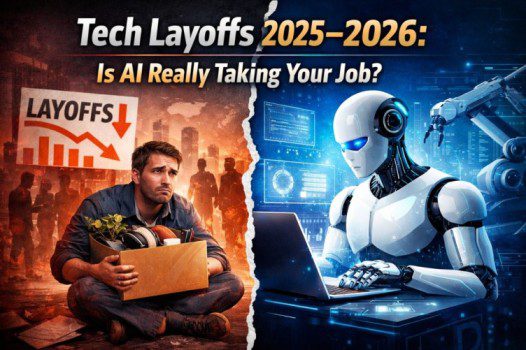
Tech Layoffs in 2025–2026: Why Amazon, Oracle, and Others Are Cutting Jobs—and What It Really Means for Your Career
In recent months, the global tech industry has witnessed a new wave of mass layoffs. Companies like Amazon and Oracle have made headlines by announcing thousands of job cuts.
Amazon reportedly laid off around 16,000 employees, while Oracle is planning to reduce up to 30,000 roles. But beyond these big names, many companies are quietly trimming their workforce.
This has created fear, confusion, and one big question:
Is AI taking away tech jobs?
Let’s explore the real reasons behind these layoffs, who is affected, and what it means for professionals in the tech industry.
1. Are These Layoffs Really About AI?
Many people believe that artificial intelligence is directly replacing software engineers and other tech workers. While AI plays a role, this idea is only partly true.
AI is not the main reason companies are laying off employees. Instead, it is one factor among many.
- ❌ AI is not making humans useless.
- ❌ AI is not replacing all engineers.
- ✅ AI is helping companies become more efficient.
2. The Biggest Reason: Cutting Bureaucracy and Hierarchy
Large companies like Amazon operate across multiple industries:
- Cloud computing (AWS)
- E-commerce
- Streaming (Prime Video)
- Logistics
- Devices
- Advertising
Managing such massive operations requires layers of management.
Intern → SDE-1 → SDE-2 → Senior → Lead → Manager → Director → VP → CTO
13–15 levels is common.
Why Is This a Problem?
- Slow decisions
- Too many approvals
- Office politics
- Low innovation
- Rising costs
Flatten the organization and remove middle management.
3. The Twitter/X Example
When Elon Musk acquired X (Twitter), he reduced staff by nearly 80%.
Despite predictions of collapse, the platform continued operating.
Large teams are not always necessary.
4. Funding the AI Race
AI investment requires:
- Data centers
- GPUs
- Research teams
- Cloud infrastructure
- Model training
Amazon alone plans to invest over $100B.
Funding comes from cost-cutting.
- Staff reduction
- Closing weak units
- Cutting support teams
5. Pandemic Overhiring
From 2020–2022, tech hiring exploded.
- Remote work boom
- E-commerce surge
- Cloud demand
- Digital expansion
Now companies are correcting mistakes.
Post-pandemic workforce correction
6. Closing Non-Core Units
Companies are shutting down:
- Grocery
- Healthcare
- Low-margin services
- Regional offices
Even high performers are affected.
7. Who Is Impacted?
Technical Roles
- Software engineers
- QA engineers
- Data scientists
- DevOps
- Legacy developers
Management
- Engineering managers
- Directors
- Product managers
Support
- HR
- Recruiting
- Legal
- Marketing
- Sales
Middle management is the biggest target.
8. Are Amazon and Oracle in Trouble?
No.
- Amazon revenue is growing
- AWS is profitable
- Oracle cloud is expanding
They are optimizing, not failing.
9. Why Layoffs Are Normal Now
- Investors reward cuts
- Markets approve
- Efficiency matters
Same work, fewer people, more profit.
10. Oracle’s Layoffs
- Data centers
- Cloud AI
- Legacy systems
- Cash flow
11. Will AI Take Your Job?
- AI will take all jobs ❌
- AI is useless ❌
- Nothing changes ❌
The Reality
- Boosts productivity
- Automates tasks
- Reduces coding effort
- Not autonomous
- Needs humans
Less than 10% of layoffs are AI-driven.
12. What You Should Do
Learn AI
- Code assistants
- Debug tools
- Documentation AI
- Testing tools
Build System Skills
- Architecture
- Scalability
- Security
- Cloud
Diversify
- DevOps
- AI basics
- Business
Stay Ready
- Update resume
- Maintain GitHub
- Network
- Keep learning
13. Should You Quit Tech?
No.
- Humans design systems
- Humans manage AI
- Humans decide
- Humans lead teams
14. Final Thoughts
- Remove bureaucracy
- Flatten hierarchy
- Fund AI
- Fix overhiring
- Close weak units
- Investor pressure
- Cost optimization
AI is only a small part.
Conclusion: Adapt, Don’t Panic
The tech industry is transforming, not collapsing.
- Keep learning
- Use AI wisely
- Upgrade skills
- Stay flexible
You will remain valuable.
The future belongs to those who work with AI.