Why You Should Always Keep Your WordPress, Themes & Plugins Updated
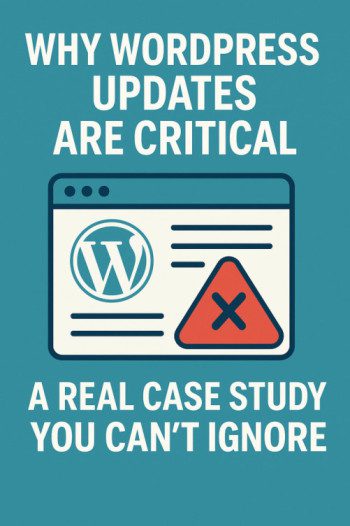
Running a WordPress website is a lot like owning a house. If you don’t maintain it, things slowly weaken—until one day something breaks so badly that you’re forced to fix everything at once.
This is exactly what happened to Suraj, a freelance designer who built a portfolio website in 2021. He was proud of it, loved how it looked, and once everything was running smoothly, he simply… stopped updating it.
For three whole years, he ignored the WordPress dashboard notifications—
Updates available: WordPress core
Updates available: 18 plugins
Updates available: 2 themes
He thought:
“It’s working fine… so why touch it?”
That decision came back to haunt him.
The Day Everything Broke
In 2024, Suraj decided to refresh his website because several clients complained that some pages weren’t loading. He logged in and noticed dozens of update alerts flashing in red.
He clicked “Update All”—something he had never done since 2021.
Within seconds:
❌ His homepage layout broke
❌ The contact form stopped working
❌ His theme threw fatal errors
❌ A plugin caused a “Critical Error” screen
❌ Some images disappeared
❌ His site went down for almost 3 hours
It was a nightmare.
He panicked, contacted his hosting support, and eventually had to hire a developer to repair the mess. The developer explained:
“Your site broke because your WordPress core, theme, and plugins were outdated. They became incompatible with newer versions.”
Suraj learned this the hard way — but you don’t have to.
Why Keeping Everything Updated Matters (With Simple Explanations)
1. Security: The #1 Reason Updates Exist
Suraj’s old version had multiple known security vulnerabilities. Hackers actively scan for outdated WordPress versions because they already know how to exploit them.
WordPress security updates patch those holes.
If you don’t update:
- Malware attacks increase
- Backdoors can be installed
- Your site can be hijacked
- Your data may be stolen
Outdated sites are the easiest targets on the internet.
2. New Features & Improvements
Each update brings:
- Faster performance
- Better editor improvements
- New customization options
- New integrations
Suraj missed 3 years of improvements that could have made his site smoother, faster, and easier to manage.
3. Better Compatibility
Themes and plugins rely on the WordPress core. If the core is updated but your theme or plugins are not (or vice-versa), your site can break.
This is exactly what happened to Suraj.
Old plugin + new WP version = ⚠️ Fatal error
Old theme + new PHP version = ⚠️ Layout broken
Updates ensure all parts of your site speak the same language.
4. Performance Improvements
Developers constantly release:
- Faster code
- More optimized scripts
- Cleanup of old functions
After he finally updated, Suraj noticed:
- Pages loaded faster
- Images loaded smoother
- Backend felt more responsive
Updating can literally make your website feel brand new.
5. Avoiding Costly Fixes
Suraj ended up paying:
- ₹6,500 for developer cleanup
- 3 hours downtime (lost clients)
- Hours of stress
If he had simply clicked “Update” monthly, he could’ve avoided all of this.
What Suraj Should Have Done (And What You Should Do Now)
1. Enable Automatic Updates
WordPress allows:
- Auto updates for core
- Auto updates for plugins
- Auto updates for themes
How to enable automatic updates
2. Take Backups Before Updating
A simple backup could have saved Suraj hours.
Use:
One click → restore from backup → problem solved.
3. Remove Unused Plugins & Themes
Suraj had:
- 6 inactive plugins
- 3 unused themes
These can still be security risks.
Delete what you don’t use.
4. Update Monthly
Even updating once a month can prevent:
- Security vulnerabilities
- Compatibility issues
- Broken layouts
A healthy website = regularly maintained website.
Learn more: Official WordPress docs
After three years of ignoring updates, Suraj learned an important lesson:
Not updating your site doesn’t keep it safe — it actually makes it weaker every day.
Updates are not just “new features.”
They are:
- Repairs
- Security patches
- Improvements
- Compatibility fixes
Your website is an asset. Treat it like one.
Don’t wait until it breaks. Update regularly—before you have your own “Suraj story.”