New SIM Rule Makes WhatsApp More Traceable in India
🔐 What’s Changing: Active SIM + Auto-Logout for Messaging Apps
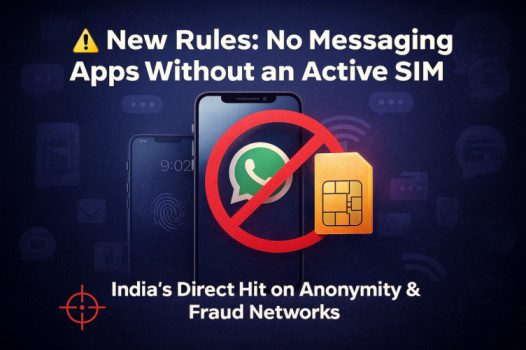
Recent directives reportedly mandate that popular messaging platforms like WhatsApp, Telegram, Signaland other OTT apps must ensure each account remains linked to an active, verified SIM card. If the SIM is removed or deactivated, access may be blocked until the number is re-verified.
In addition: for web or companion-device versions (e.g. WhatsApp Web/Desktop), sessions will auto-logout every six hours, requiring users to re-authenticate via QR code. These changes mark a dramatic shift from existing practice — where number verification happens only once, and apps continue to work even if the SIM changes or becomes inactive.
✅ What the New Rules Require (Tentatively)
- Persistent SIM-binding: The SIM used at registration must remain active and in the device for the account to stay functional.
- Periodic re-verification / checks: Apps may be required to re-confirm SIM/number status at regular intervals (for example, every 90 days).
- Auto-logout on web/desktop: Web sessions must expire at fixed intervals (e.g. 6 hours), forcing re-authentication.
- Traceability & compliance reporting: OTT-messaging platforms may be treated like telecom services, required to maintain traceable user identity and report compliance to regulators.
🎯 Why This Move — What Regulators & Supporters Say
- Crackdown on anonymity: Many online frauds, scams and spam operations rely on accounts tied to discarded, deactivated or abandoned SIMs. Persistent SIM-binding would make such anonymous accounts harder to maintain.
- Better accountability & traceability: Every active session becomes tied to a physical SIM card — hence to a real phone number and device — making misuse easier to trace and curb.
- Stronger security for users: Regular re-authentication and limited web sessions reduce risk of unauthorized long-term access.
- OTT apps under a tighter regulatory frame: Messaging platforms would move closer to telecom-like compliance, pushing them toward stricter identity norms and potentially stronger oversight.
⚠️ Potential Drawbacks & What Users Should Watch Out For
| Issue / Concern | What It Could Mean for Users |
|---|---|
| Frequent cut-offs for legitimate users | If you remove or change your SIM (travel, dual-SIM phone, operator switch), you might get locked out until re-verification. |
| Worsened user experience on web/desktop | Frequent auto logouts (e.g. every 6 hours) can be frustrating — especially if you rely on messaging for work or file sharing. |
| Dual-SIM / multiple device complications | Users who swap SIMs, use secondary SIMs, or share devices may face more hurdles. |
| Not a foolproof solution against fraud | Fraudsters may still exploit legitimate SIMs (e.g. fake/mule documents) — SIM-binding alone doesn’t guarantee true identity. |
| Privacy vs traceability trade-off | Users valuing privacy or anonymity (journalists, activists, etc.) may lose flexibility; the system leans toward accountability over anonymity. |
🧑💻 What This Means for You — How to Prepare & Stay Smooth
- Keep the same SIM active that you used to register your messaging apps. Avoid frequent SIM swapping if possible.
- Expect to re-authenticate on WhatsApp Web / Desktop every few hours. Keep your phone handy for QR-code login.
- If you travel, use international SIMs, or swap operators — prepare for possible disruption of messaging access.
- Use this as an opportunity to review your privacy habits — store important chats securely, enable two-step authentication, and avoid sharing SIM-linked numbers carelessly.
- Watch for official updates from your messaging app: they may roll out alerts, new login flows, or guidelines to ease the transition safely.
Safer Digital Chats — With Trade-Offs
The proposed SIM-binding and session-logout rules could mark a turning point in how messaging apps operate — shifting from “set once and forget” anonymity toward persistent identity verification and accountability.
For many — especially those concerned about scams, spam, and online abuse — this could be a welcome step. But for others — frequent travelers, dual-SIM users, privacy-conscious individuals — the changes may cause friction and inconvenience.
In short: it’s a bold attempt to make online messaging safer and more traceable — but success depends heavily on how strictly and fairly the rules are implemented, and whether user-convenience and privacy are adequately balanced against security.