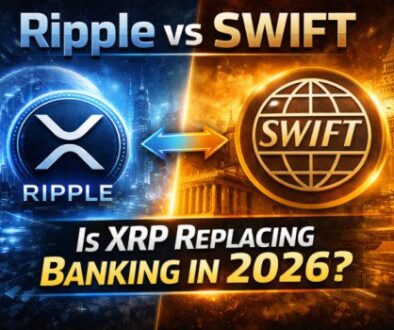
















XRP Listed Alongside SWIFT Under “Payment Instruction”: Here’s the Big Deal
In the ever-evolving world of global finance, a quiet shift is making big noise: XRP, the native token of Ripple Labs, has been spotted listed alongside SWIFT—the long-time global messaging standard—in a new category labeled “Payment Instruction.” But what does this actually mean for XRP, Ripple, and the future of cross-border payments?
Let’s break it down. 👇
🔍 What Happened?
Recently, documents and interface previews from banking software providers and enterprise solutions (like Temenos and Finastra) showed XRP or RippleNet mentioned next to SWIFT in dropdown menus under sections titled “Payment Instruction,” “Messaging Standards,” or “Transfer Protocol.”
This may seem like a small UI detail, but to those in fintech and crypto, it’s a monumental signal of where global finance is headed.
🧠 Why Is This Important?
1. XRP Is Being Treated Like an Industry Standard
SWIFT has been the de facto global payments system since the 1970s, enabling over 11,000 banks to communicate securely and send payment instructions. Seeing XRP listed in the same context means it’s not just a “crypto asset” anymore—it’s being considered as infrastructure.
2. Ripple’s Strategy Is Paying Off
Ripple has long positioned XRP as a bridge currency for faster, cheaper cross-border settlements. Partnerships with banks, remittance services, and financial institutions (like SBI, Santander, and Tranglo) now appear to be bearing fruit.
3. Bank-Grade Software Is Recognizing XRP
Integration into enterprise banking platforms indicates XRP is being used or prepared for use by licensed financial entities—not just crypto startups. That’s a major win for legitimacy and long-term adoption.
💡 What Is SWIFT?
The Society for Worldwide Interbank Financial Telecommunication (SWIFT) is a Belgium-based cooperative that standardizes secure financial messaging between banks and financial institutions.
It doesn’t move money itself—it just sends instructions. The actual transfer is done by correspondent banks, often taking days and involving high fees.
⚡ XRP vs. SWIFT: What’s the Difference?
| Feature | SWIFT | XRP/RippleNet |
|---|---|---|
| Founded | 1973 | 2012 (Ripple Labs) |
| Speed | 1–5 business days | Seconds to minutes |
| Fees | High (intermediaries involved) | Low |
| Currency Support | All fiat currencies | All fiat via XRP bridge |
| Intermediaries | Multiple correspondent banks | Direct or minimal |
| Blockchain-based? | ❌ No | ✅ Yes |
| Settlement finality | Delayed | Instant (with XRP) |
🧭 The Ripple Roadmap: Where XRP Is Headed
Ripple has been playing a regulatory-first, institutional-focused game, which is now showing results:
✅ ODL (On-Demand Liquidity)
Ripple uses XRP to settle cross-border transactions without pre-funded accounts.
✅ RippleNet Adoption
Over 100 financial institutions are part of RippleNet.
✅ CBDC Collaborations
Ripple is in talks or partnerships with central banks like Bhutan, Palau, and Montenegro for CBDC development.
✅ Compliance-First Approach
Ripple is working to remain fully compliant with FATF, ISO 20022, and other financial standards.
👩⚖️ What About the SEC Lawsuit?
Ripple’s case with the U.S. Securities and Exchange Commission (SEC), which began in December 2020, accused XRP of being an unregistered security. However, in 2023, the court ruled that XRP is not a security in programmatic sales, giving Ripple a partial victory.
📌 Takeaway: XRP’s legal clarity in the U.S. gives it an edge compared to other crypto projects.
🏦 Who Else Is Supporting XRP Integration?
- Finastra: A core banking software provider with over 9,000 customers.
- Temenos: A banking system used by over 3,000 institutions worldwide.
- Volante Technologies: Offers integrations between RippleNet and banking infrastructure.
- Tranglo: Facilitates ODL across Asia and the Middle East.
These firms listing Ripple/XRP as a payment option are quietly helping build the rails of next-gen finance.
🔮 The Future: Is XRP the New SWIFT?
Not quite… yet. SWIFT is still dominant, with massive institutional loyalty.
But:
- SWIFT is slow and expensive
- XRP is fast and cost-efficient
- SWIFT is centralized
- XRP leverages blockchain’s transparency and immutability
With increasing interoperability tools, XRP doesn’t need to “replace” SWIFT—it just needs to coexist and offer a better alternative, especially for high-volume, cross-border use cases.
📉 Risks and Considerations
❗Volatility
XRP is still subject to price fluctuations.
❗Regulatory Risk
More regulation could limit crypto’s role in finance—though Ripple seems prepared.
❗Adoption Rate
Not all banks are ready to leap to blockchain infrastructure—legacy systems are sticky.
🚀 Conclusion: Why This Matters
Seeing XRP listed next to SWIFT in enterprise-level financial software is a huge vote of confidence in Ripple’s mission to modernize payments. It symbolizes that XRP is no longer just a speculative token—it’s becoming part of the global financial plumbing.
✅ Institutional adoption is real.
✅ Enterprise software is evolving.
✅ Blockchain is going mainstream.
Ripple’s slow-and-steady strategy appears to be working. Keep your eye on XRP—this may just be the beginning of its biggest chapter yet.
🔗 Want to Learn More?
🙋♂️ What Do You Think?
Do you see XRP eventually overtaking SWIFT in relevance?
Would you trust your bank to use crypto tech like RippleNet?
👇 Leave a comment and let’s discuss!