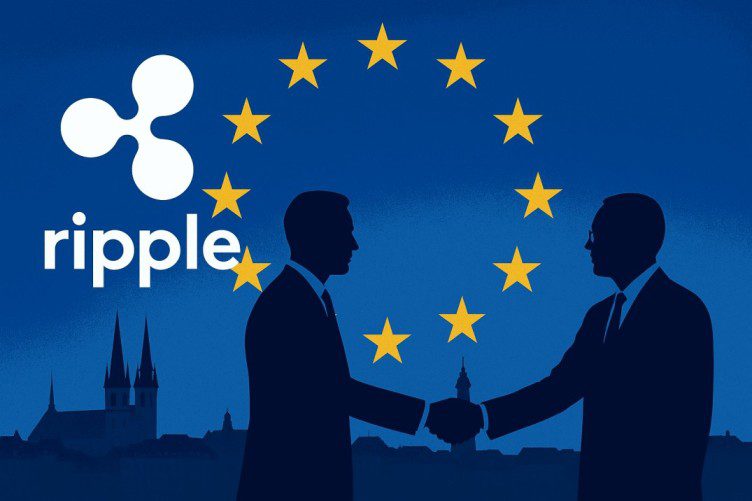
Ripple meets Luxembourg’s Finance Minister Gilles Roth — a milestone on the road to an EU license
Ripple is making serious moves again — and this time, the spotlight is on Luxembourg, one of Europe’s most respected financial hubs. The company’s senior team recently met with Gilles Roth, Luxembourg’s Minister of Finance, as Ripple advances toward securing a license to operate in the country.
That single meeting says a lot — not just about Ripple’s ambitions, but about how Europe is opening its doors to blockchain innovation. Let’s unpack what really happened, why it matters, and what it could mean for the future of digital finance in the EU. 💶✨
🤝 A High-Profile Meeting with a Purpose
Gilles Roth shared on social media that he had a “great meeting with Ripple,” highlighting their discussions about expanding operations in Luxembourg and across the EU. Ripple executives — including members of their legal and policy team — were there to discuss regulatory licensing and how Ripple plans to build compliant digital payment solutions within the European framework.
This wasn’t just a friendly photo-op. It’s part of Ripple’s larger strategy to become a regulated digital finance powerhouse in Europe.
🇱🇺 Why Luxembourg? Because It’s the Heart of European Finance
Luxembourg might be a small country, but in the financial world, it’s a giant. 💼
It’s home to:
- Over 130 banks from around the world
- A progressive regulator — the CSSF (Commission de Surveillance du Secteur Financier)
- A clear approach to crypto and blockchain licensing
From PayPal to Amazon, many global financial players use Luxembourg as their European headquarters. For Ripple, setting up here means access to the entire European Economic Area (EEA) — one license, 30 countries.
If Ripple’s application succeeds, it could “passport” its services throughout the EU under MiCA (Markets in Crypto-Assets Regulation) — a game changer for its European expansion.
💡 What Kind of License Is Ripple Going For?
While the exact category isn’t confirmed, industry insiders suggest Ripple is pursuing an Electronic Money Institution (EMI) or a MiCA-compliant Digital Asset Service Provider license.
This would allow Ripple to:
- Offer regulated crypto-payment services in the EU
- Possibly issue stablecoins like its rumored $RLUSD (Ripple USD) in Europe
- Provide custody or liquidity solutions for banks and financial institutions
Think of it as Ripple laying the legal foundation for a multi-currency, blockchain-based payment network that could rival traditional banking systems — but faster, cheaper, and fully regulated.
⚖️ Regulation Isn’t the Enemy — It’s the Bridge
Ripple has learned the hard way how important compliance is. After years of battling lawsuits and regulatory confusion in the U.S., the company has shifted focus to friendly, forward-thinking jurisdictions like Singapore, the UAE, and now Luxembourg.
Luxembourg’s regulators have a reputation for clarity and cooperation — they’re open to blockchain innovation but insist on strong governance and consumer protection. It’s the perfect environment for a company like Ripple that thrives on trust, transparency, and cross-border collaboration.
🧩 What This Means for Ripple — and for Crypto in Europe
If Ripple secures this license, it won’t just be another corporate milestone — it could reshape the European fintech landscape.
Here’s what’s at stake:
✅ For Ripple
- A European regulatory home base
- Easier collaboration with banks and institutions
- Stronger credibility for XRP and RLUSD adoption
- Access to the EEA’s 450+ million consumers
✅ For Europe
- A major vote of confidence in blockchain innovation
- Potential leadership in cross-border crypto payments
- A stronger bridge between traditional finance and DeFi
📈 A Step Closer to Global Expansion
This move fits perfectly into Ripple’s 2025 roadmap — global compliance, stablecoin innovation, and enterprise partnerships.
Luxembourg could become the European nerve center for RippleNet, the company’s global payment network that connects banks, remittance firms, and financial institutions worldwide.
And let’s not forget — this comes shortly after Ripple launched its RLUSD stablecoin and expanded operations in Singapore and Dubai. The momentum is clear: Ripple is building a globally compliant, institution-friendly blockchain ecosystem.
💬 What Minister Gilles Roth’s Support Means
When a sitting Finance Minister publicly praises your company, that’s not small talk — it’s a signal to the market.
Gilles Roth’s statement that Ripple is “advancing toward securing their license to operate in Luxembourg” reflects not just openness, but political will to support blockchain innovation. It positions Luxembourg as a European leader in digital finance — and Ripple as one of its key partners.
🔮 What’s Next?
Here’s what to watch for in the coming months:
- Formal license approval from Luxembourg’s CSSF
- Partnership announcements with European banks and fintechs
- Launch of EU-based RippleNet and stablecoin services
- Possible integration with digital euro initiatives
If Ripple pulls this off, it won’t just be another crypto company expanding in Europe — it’ll be a regulated, trusted fintech player shaping the future of global payments.
🌐
Ripple’s meeting with Luxembourg’s Finance Minister marks a turning point. It’s not about hype or headlines — it’s about building real, regulated infrastructure for the next generation of finance.
While the U.S. still debates crypto rules, Europe is quietly laying the foundations for blockchain-based money. And Ripple? It’s positioning itself right at the center of that revolution. 💫