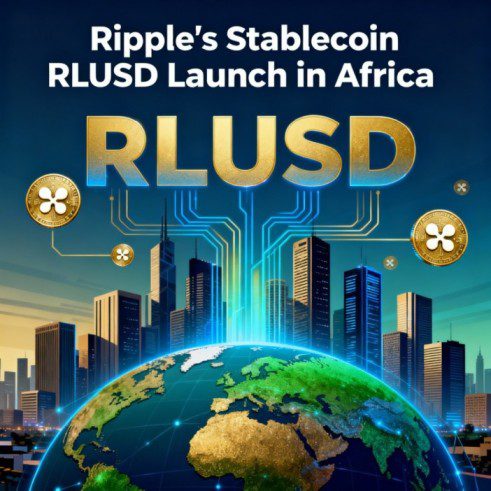
Ripple’s Stablecoin (RLUSD) Launch in Africa: A New Era for Cross-Border Finance
The African continent is at the heart of a global financial revolution. With millions of people underserved by traditional banks yet fully connected through mobile technology, Africa is a fertile ground for digital finance innovation. Recognizing this, Ripple has launched its stablecoin RLUSD in Africa—an initiative set to redefine cross-border finance, remittances, and financial inclusion.
This move positions Ripple not only as a leader in blockchain-powered payments but also as a key driver of economic transformation in one of the world’s fastest-growing markets.
Why Ripple Chose Africa for RLUSD
Africa is one of the largest markets for remittances and cross-border payments. According to the World Bank, sub-Saharan Africa received over $54 billion in remittances in 2023, with countries like Nigeria, Kenya, and Ghana leading the charts. However, fees remain the highest in the world, averaging 8–9% per transaction, compared to the global average of 6%.
Ripple’s RLUSD stablecoin aims to tackle these pain points by offering:
- Low-cost transfers compared to traditional banks and remittance services.
- Faster settlements, reducing transfer times from days to just seconds.
- Price stability, eliminating volatility risks often seen with cryptocurrencies like Bitcoin and Ethereum.
By pegging RLUSD to the U.S. dollar, Ripple ensures users can transact seamlessly without worrying about currency fluctuations.
Ripple’s Partnerships in Africa
Ripple is not entering Africa alone. Its success relies on strategic partnerships with fintech leaders already active in the region:
- Chipper Cash – One of Africa’s largest mobile payments platforms, with over 5 million users, enabling instant low-cost transfers across multiple African countries.
- VALR – A leading South African crypto exchange, providing liquidity and easy on/off-ramps for RLUSD.
- Yellow Card – Operating in over 20 African countries, Yellow Card facilitates crypto adoption, merchant payments, and currency exchange.
These collaborations ensure RLUSD is not just another digital token, but a real-world financial tool integrated into Africa’s payment ecosystem.
RLUSD: A Catalyst for Financial Inclusion
Over 60% of adults in sub-Saharan Africa remain unbanked or underbanked, yet mobile penetration exceeds 80%. This paradox highlights the potential for mobile-first financial solutions.
With RLUSD, users can:
- Store digital dollars securely without needing a bank account.
- Send and receive payments across borders instantly.
- Access e-commerce opportunities globally.
- Hedge against local currency devaluation (a major issue in countries with high inflation).
For example, a worker in South Africa sending money home to Kenya could bypass banks and money transfer operators, reducing costs dramatically while ensuring funds arrive within seconds.
Ripple vs. Other Stablecoins in Africa
While stablecoins like USDT (Tether) and USDC already have some presence in Africa, Ripple’s RLUSD has key advantages:
- Regulatory Compliance – Ripple has been actively working with regulators worldwide, including progress with the U.S. SEC. RLUSD is built with compliance at its core.
- Enterprise Network – Ripple’s RippleNet connects over 300 financial institutions globally, making RLUSD more likely to be adopted by banks and fintech firms.
- Liquidity on the XRP Ledger – RLUSD runs on the XRP Ledger, known for its fast transaction speeds (3–5 seconds) and low fees (<$0.01 per transaction).
This positions RLUSD as a serious alternative to existing stablecoins, particularly for institutional cross-border finance.
Economic Impact for Africa
Ripple’s RLUSD launch could have far-reaching economic benefits, including:
- Reducing Remittance Costs – Lower fees mean more money reaches families, boosting household income.
- Boosting Small Businesses – SMEs can access global markets more easily with stable, borderless payments.
- Encouraging Foreign Investment – A reliable stablecoin infrastructure makes African markets more attractive to investors.
- Strengthening Regional Trade – Intra-African trade, often hampered by currency barriers, can be facilitated with RLUSD.
By addressing financial inefficiencies, RLUSD could contribute to Africa’s goal of creating a single digital market under the African Continental Free Trade Area (AfCFTA).
Challenges Ahead
Despite its promise, Ripple’s RLUSD will face challenges:
- Regulatory uncertainty in some African countries that are cautious about cryptocurrencies.
- Adoption hurdles, as users may be hesitant to shift from cash-based economies.
- Competition from other stablecoins and central bank digital currencies (CBDCs).
However, Ripple’s proven ability to navigate regulatory landscapes and build strong institutional partnerships gives RLUSD a competitive edge.
Future Outlook
Ripple’s RLUSD launch in Africa is not just a regional move—it’s a strategic blueprint for stablecoin adoption worldwide. If successful, it could expand into other emerging markets in Asia and Latin America, where remittance challenges are equally pressing.
Moreover, as Ripple pushes for a U.S. banking license and explores ETF partnerships, RLUSD could become deeply embedded in the global financial system, linking Africa’s digital economy with the rest of the world.
Ripple’s stablecoin RLUSD is more than just another cryptocurrency—it’s a transformational tool for financial inclusion in Africa. By combining speed, security, low costs, and regulatory alignment, RLUSD could reshape how millions of Africans access, store, and transfer money.
As cross-border finance evolves, Ripple’s move in Africa may well be remembered as the moment when stablecoins crossed from crypto speculation into real-world economic empowerment.