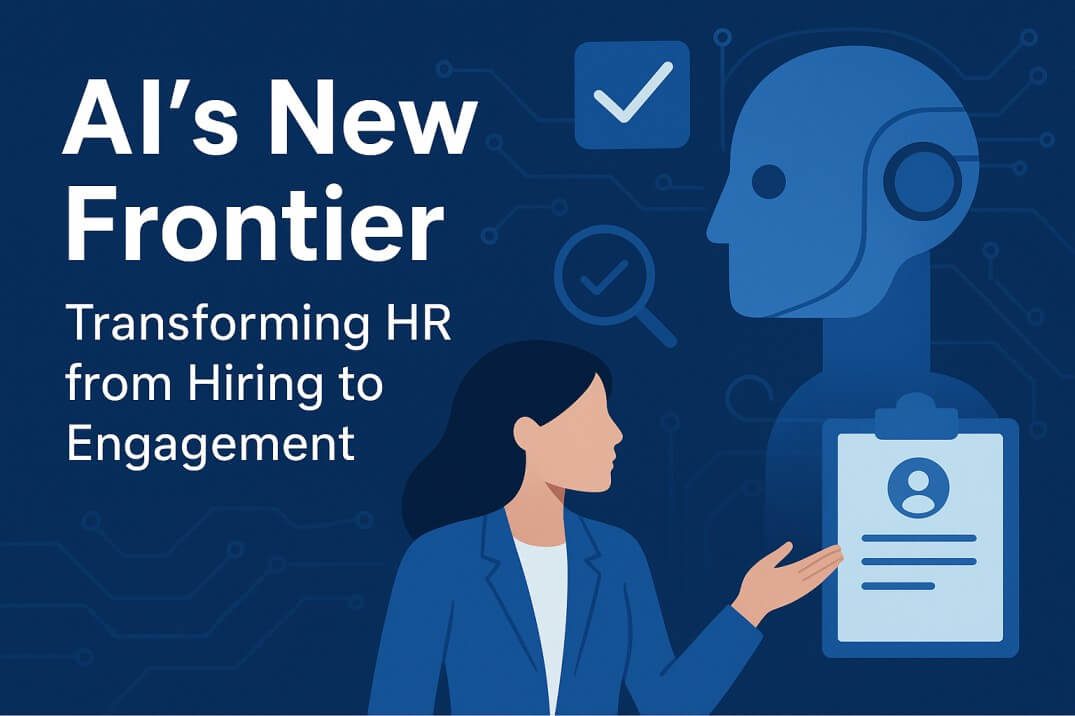
AI’s New Frontier: Transforming HR from Hiring to Engagement
The future of work is here — and Artificial Intelligence (AI) is leading the charge. From streamlining hiring processes to enhancing employee engagement, AI has evolved from a “nice-to-have” tool to a strategic necessity for modern HR teams.
As businesses face growing challenges like talent shortages, remote workforce management, and high employee turnover, AI-powered HR solutions are reshaping how organizations attract, retain, and develop their talent.
In this article, we’ll explore how AI is revolutionizing HR functions — from talent acquisition to employee experience — and what this means for the future of human resources.
1. AI in Talent Acquisition: Smarter, Faster Hiring
Hiring top talent has always been one of the most time-consuming and expensive HR tasks. Traditional recruitment often involves:
- Manual resume screening
- Lengthy interview scheduling
- Bias-prone decision-making
AI-powered recruitment tools are changing this by automating repetitive tasks and delivering data-driven hiring decisions.
Key AI Applications in Recruitment
- Automated Resume Screening – AI algorithms scan thousands of resumes in seconds, filtering candidates based on skills, experience, and keywords. Learn more on LinkedIn Recruiter.
- Predictive Candidate Matching – Machine learning matches candidates to job descriptions by analyzing historical hiring success data.
- Chatbots for Candidate Engagement – AI chatbots handle FAQs, schedule interviews, and keep candidates engaged 24/7.
- Bias Reduction in Hiring – Advanced AI tools can anonymize applications to focus on skills rather than demographics, promoting diversity and inclusion. Read how to reduce bias in AI.
Example:
LinkedIn’s AI-driven Recruiter System Connect helps companies identify and connect with top candidates faster, reducing time-to-hire by up to 50%.
2. Personalized Employee Onboarding
First impressions matter. A structured and engaging onboarding experience directly impacts employee retention and productivity.
AI enables personalized onboarding journeys by:
- Creating customized training paths based on individual skills and career goals.
- Using chatbots to guide new hires through company policies and resources.
- Automating paperwork, payroll setup, and compliance checklists.
Stat Check:
According to a Glassdoor study, companies with strong onboarding processes improve new hire retention by 82% and productivity by over 70%.
3. Boosting Employee Engagement with AI
Employee engagement goes beyond free snacks and fun Fridays — it’s about emotional connection, motivation, and growth opportunities.
AI-driven tools help HR leaders monitor and improve engagement through:
- Sentiment Analysis: AI evaluates employee feedback from surveys, emails, and chat platforms to detect dissatisfaction early.
- Predictive Retention Models: Algorithms identify at-risk employees before they resign.
- Personalized Learning & Development: AI recommends courses and skill-building opportunities tailored to each employee. Explore AI learning paths.
Real-world Example:
Microsoft uses AI-powered analytics to study collaboration patterns and workload balance, helping managers prevent burnout and improve team performance.
4. AI in Performance Management
Traditional performance reviews are often biased, irregular, and stressful. AI enables a continuous feedback loop that’s:
- Data-driven – Metrics like productivity, project outcomes, and peer feedback are analyzed in real-time.
- Objective – AI minimizes favoritism by using standardized performance criteria.
- Actionable – Managers receive actionable insights for coaching and career development.
This approach fosters growth-driven performance management, benefiting both employees and the organization.
5. Strategic HR Decision-Making with Predictive Analytics
One of AI’s most powerful contributions to HR is predictive analytics.
By analyzing workforce data, AI can help HR teams forecast:
- Future hiring needs
- Turnover risks
- Training effectiveness
- Compensation strategies
This transforms HR from a reactive department to a strategic business partner, enabling better planning and cost optimization.
Example:
IBM Watson AI provides insights into workforce trends, helping companies reduce attrition rates and plan talent pipelines effectively.
Challenges of AI in HR
While AI offers immense potential, HR leaders must navigate certain challenges:
| Challenge | Solution |
|---|---|
| Data privacy concerns | Implement strict data governance policies and comply with GDPR / CCPA. |
| Bias in AI algorithms | Regularly audit algorithms to prevent discriminatory outcomes. |
| Employee trust | Maintain transparency about how AI decisions are made. |
| Integration issues | Choose scalable AI solutions that integrate with existing HR systems. |
The Future of AI-Powered HR
AI won’t replace HR professionals — it will empower them.
Here’s what the next decade of AI-driven HR could look like:
- Virtual HR Assistants handling most employee queries.
- Fully automated recruitment pipelines from sourcing to offer letters.
- Hyper-personalized career growth plans for every employee.
- AI-driven DEI (Diversity, Equity, and Inclusion) programs promoting fairness. Learn how AI supports DEI.
Final Thoughts
AI is not just a trend — it’s the new backbone of modern HR strategy.
From talent acquisition to employee engagement, AI is helping businesses hire smarter, retain talent longer, and create more fulfilling work environments.
Companies that embrace AI now will have a competitive edge in the future workforce. Read McKinsey’s AI report.