ISO 20022 Explained: The Global Financial Revolution That Started in November 2022
💡 What Is ISO 20022?
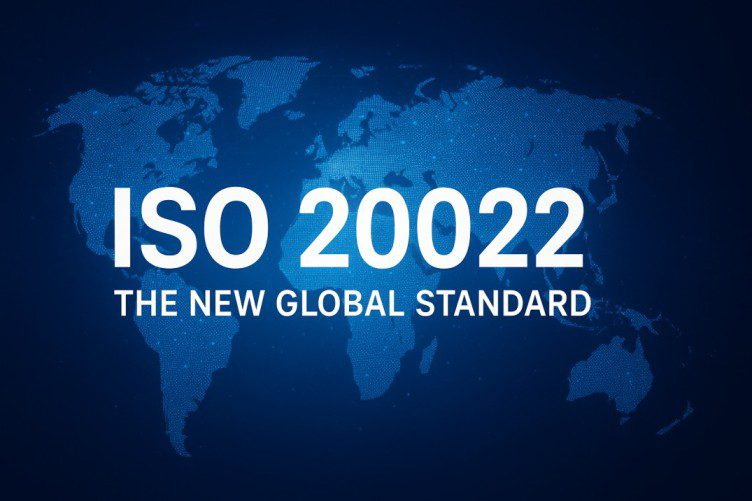
ISO 20022 is not a cryptocurrency, a bank, or a company — it’s a universal messaging standard for global finance.
Think of it as a new digital language that allows banks, payment networks, and even blockchain systems to communicate with each other more efficiently.
For decades, banks have used SWIFT MT messages — an old, limited system that doesn’t support rich data. ISO 20022 replaces that with structured XML-based MX messages that can carry far more information securely and accurately.
In short:
ISO 20022 = The upgrade from “bank language 1.0” to “bank language 2.0”
🧠 Why Was a New Standard Needed?
Before ISO 20022, financial institutions around the world were using incompatible systems and data formats. This caused:
- ❌ Payment delays
- ❌ Missing transaction details
- ❌ Compliance and fraud-detection gaps
- ❌ High costs for cross-border transfers
ISO 20022 solves all that by creating one standardized language for all transactions — from domestic payments to securities, foreign exchange, and trade finance.
Benefits include:
- 💾 Rich Data: Supports detailed payment and remittance information
- 🕵️ Transparency: Easier anti-fraud and compliance tracking
- 🌐 Interoperability: Works across different networks and countries
- ⚙️ Automation: Enables straight-through processing (STP)
- 🔐 Security: Structured data reduces risk of misinterpretation
📅 Why November 2022 Was the Turning Point
The SWIFT network, used by over 11,000 financial institutions in 200+ countries, officially began migrating to ISO 20022 in November 2022.
This marked the start of one of the biggest technological upgrades in global finance history.
Timeline of ISO 20022 Implementation
| Year | Event |
|---|---|
| 2018–2021 | Testing and pilot programs by global banks |
| November 2022 | ISO 20022 live phase begins (SWIFT migration start) |
| March 2023 | SWIFT enables ISO 20022 messages in live production |
| November 2025 | Deadline — full migration complete, old MT messages retired |
So when people talk about “November 2022”, they’re referring to the official launch window of ISO 20022 for cross-border payments and cash reporting.
💰 Why ISO 20022 Is Huge for Crypto
Here’s where it gets exciting for blockchain and digital asset enthusiasts.
ISO 20022 is built for interoperability, which means it can work with systems that speak its language — including certain cryptocurrencies that were designed for institutional use.
🪙 ISO 20022-Compliant Cryptos:
| Crypto | Network | Use Case |
|---|---|---|
| XRP (Ripple) | RippleNet | Cross-border payments for banks |
| XLM (Stellar Lumens) | Stellar Network | Remittances, financial inclusion |
| XDC (XinFin) | XDC Network | Trade finance and tokenization |
| ALGO (Algorand) | Algorand | Smart contracts and CBDC projects |
| IOTA | Tangle Network | IoT microtransactions |
| QNT (Quant) | Overledger | Blockchain interoperability |
These digital assets are aligned with ISO 20022, meaning they can be integrated into future banking and payment systems — potentially bridging the gap between traditional finance (TradFi) and blockchain finance (DeFi).
🏦 The Role of SWIFT, Ripple, and Central Banks
🔁 SWIFT
SWIFT is modernizing its global payments system to use ISO 20022 messages. This will help banks send faster, richer, and more transparent transactions.
💧 Ripple (XRP)
Ripple has been ISO 20022-compliant since early 2021, making XRP one of the few cryptocurrencies ready for this new era. RippleNet’s goal? To make cross-border payments as fast and cheap as sending an email — directly aligned with ISO 20022’s data standards.
🏛️ Central Banks
Many central banks — including those of the EU, UK, India, Japan, and the U.S. (via Fedwire) — are either already using or migrating to ISO 20022. This standard is also being integrated into CBDC (Central Bank Digital Currency) discussions and prototypes.
🚀 What Happens by November 2025?
By November 2025, the SWIFT network will fully phase out the old MT messaging standard. All banks and financial institutions must use ISO 20022 exclusively for:
- Payments
- Securities
- Foreign exchange
- Trade finance
This will create a unified, data-rich financial ecosystem — and open the door for seamless blockchain integration.
🔮 Future Outlook: The Bridge Between Banks and Blockchain
As ISO 20022 becomes universal, the separation between traditional banking systems and digital assets will blur.
Imagine:
- A bank sending funds using ISO 20022 data — and part of that transaction settling on a Ripple or Stellar blockchain.
- A CBDC communicating directly with a stablecoin or tokenized asset using standardized data fields.
This isn’t science fiction — it’s the next phase of financial evolution, and it started rolling out in November 2022.
ISO 20022 isn’t just a technical upgrade — it’s the foundation for the future of global payments. By standardizing how data moves, it enables faster, cheaper, and smarter transactions — and gives blockchain projects like XRP and Stellar the perfect bridge into mainstream finance.
As we approach November 2025, expect to see:
- 🌐 More banks fully integrated with ISO 20022
- 💸 Blockchain partnerships accelerating
- 🏛️ CBDCs leveraging ISO 20022-compliant frameworks
The financial world is finally speaking one universal language — and it all began in November 2022. 🌍💬