
























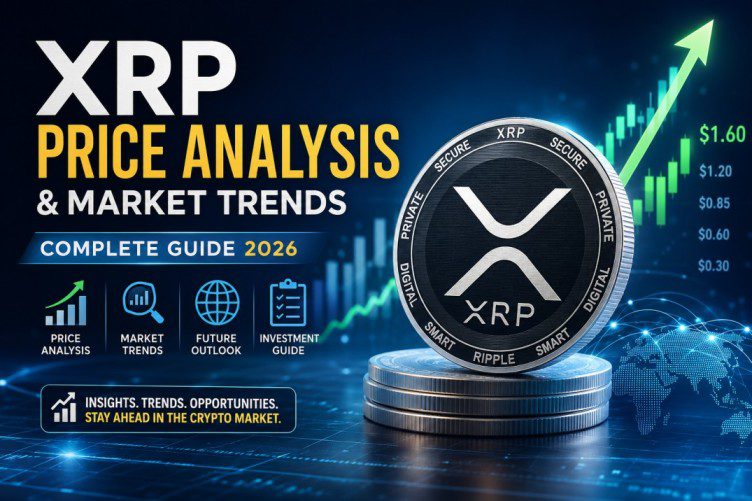
XRP Price Analysis and Market Trends: A Complete Investor Guide (2026)
XRP Price Analysis and Market Trends: What Investors Need to Know in 2026
The cryptocurrency market continues to evolve rapidly, and XRP remains one of the most closely watched digital assets. Developed to facilitate fast and low-cost international payments, XRP has maintained its position among the world’s largest cryptocurrencies despite experiencing regulatory challenges and market volatility over the years.
Whether you’re a beginner exploring cryptocurrency or an experienced investor looking for the latest XRP market trends, understanding both the technical and fundamental factors influencing XRP is essential before making investment decisions.
In this comprehensive guide, we’ll explore XRP’s price behavior, the major factors driving its value, technical analysis, market trends, future outlook, risks, and investment strategies.
What Is XRP?
XRP is the native cryptocurrency of the XRP Ledger, an open-source blockchain designed for high-speed, low-cost global payments. Unlike many cryptocurrencies that focus primarily on decentralized finance or smart contracts, XRP was built to improve cross-border financial transactions.
Key characteristics include:
- Transaction settlement in 3–5 seconds
- Extremely low transaction fees
- High scalability
- Energy-efficient consensus mechanism
- Global payment capabilities
These features have made XRP attractive to financial institutions seeking alternatives to traditional international payment systems.
Current XRP Market Overview
The cryptocurrency market remains influenced by several macroeconomic factors including:
- Global interest rates
- Institutional investment
- Government regulations
- Bitcoin market cycles
- Overall investor sentiment
Like most altcoins, XRP often follows Bitcoin’s general market direction while also responding to XRP-specific news such as legal developments, exchange listings, and adoption announcements.
XRP Price Performance
Over its history, XRP has experienced multiple market cycles:
Bull Markets
During strong crypto bull runs, XRP has historically delivered substantial gains as investor optimism increases across the digital asset market.
Bear Markets
Like other cryptocurrencies, XRP has also experienced significant corrections during market downturns, often losing a large percentage of its value before recovering.
Recovery Phases
XRP has repeatedly demonstrated the ability to recover after periods of market uncertainty, supported by continued development of the XRP Ledger ecosystem and renewed investor confidence.
Factors Affecting XRP Price
1. Bitcoin Price Movement
Bitcoin remains the dominant force in the cryptocurrency market. When Bitcoin experiences strong upward momentum, XRP and other altcoins often benefit from increased market participation.
Conversely, major Bitcoin corrections frequently lead to declines across the broader crypto market.
2. Regulatory Developments
Regulatory clarity remains one of the most important factors affecting XRP.
Positive legal developments can:
- Increase investor confidence
- Encourage institutional participation
- Improve exchange accessibility
Negative regulatory actions can create uncertainty and increase volatility.
3. Institutional Adoption
Banks, payment providers, and fintech companies exploring blockchain-based settlement solutions may contribute to long-term XRP demand.
Greater institutional adoption typically supports positive long-term sentiment.
4. Market Liquidity
Higher trading volume generally indicates stronger market participation.
Healthy liquidity helps:
- Reduce price manipulation
- Improve order execution
- Support sustainable price movements
5. Cryptocurrency Market Sentiment
Investor psychology plays a major role.
Positive sentiment often results in:
- Increased buying activity
- Higher trading volumes
- Greater retail participation
Fear and uncertainty usually have the opposite effect.
Technical Analysis of XRP
Technical analysis helps traders identify potential price movements using historical market data.
Important indicators include:
Moving Averages
Moving averages help identify long-term trends.
- Price above the 50-day moving average often suggests bullish momentum.
- Price below major moving averages may indicate bearish conditions.
Relative Strength Index (RSI)
RSI measures momentum.
Generally:
- Above 70 = Overbought
- Below 30 = Oversold
Extreme readings can signal possible reversals.
MACD Indicator
The Moving Average Convergence Divergence (MACD) identifies changes in trend momentum.
Bullish crossovers often indicate strengthening buying pressure.
Bearish crossovers may suggest weakening momentum.
Support and Resistance
Support levels represent areas where buyers tend to enter.
Resistance levels represent areas where sellers often become active.
A breakout above resistance with strong volume may signal the beginning of a stronger upward trend.
XRP Market Trends in 2026
Growing Institutional Interest
Institutional investors continue exploring blockchain technology for payment infrastructure.
Increasing adoption of digital asset technology may improve XRP’s long-term outlook.
Expansion of Cross-Border Payments
Traditional international transfers remain expensive and slow.
XRP’s fast settlement capabilities continue to position it as a potential solution for cross-border payment efficiency.
Growth of Blockchain Adoption
Governments, financial institutions, and enterprises continue investing in blockchain infrastructure.
This broader ecosystem growth may indirectly benefit XRP.
Improved Regulatory Clarity
As governments establish clearer digital asset regulations, uncertainty may gradually decrease.
More transparent regulations often encourage long-term investment.
Integration with Financial Services
Future partnerships with payment providers, fintech companies, and enterprise solutions could expand XRP’s real-world utility.
Risks of Investing in XRP
Every investment carries risks.
Investors should consider:
Market Volatility
Cryptocurrency prices can move dramatically within short periods.
Regulatory Risk
Government regulations remain one of the largest uncertainties for digital assets.
Competition
XRP competes with:
- Stablecoins
- Central Bank Digital Currencies (CBDCs)
- Other blockchain payment networks
- Traditional financial systems
Macroeconomic Conditions
Higher interest rates, inflation concerns, or global recessions can reduce investor appetite for higher-risk assets such as cryptocurrencies.
Is XRP a Good Long-Term Investment?
The answer depends on your investment goals and risk tolerance.
Potential strengths include:
- Established market presence
- Strong global community
- Fast transaction speeds
- Low fees
- Real-world payment use cases
- Active ecosystem development
Potential concerns include:
- High volatility
- Regulatory uncertainty
- Competition from emerging technologies
- Dependence on broader crypto market cycles
Long-term investors should diversify their portfolios rather than relying on a single cryptocurrency.
Tips for XRP Investors
Before investing:
- Research thoroughly.
- Invest only what you can afford to lose.
- Diversify your portfolio.
- Follow market news regularly.
- Monitor technical indicators.
- Use secure wallets for long-term holdings.
- Avoid emotional buying and selling.
Frequently Asked Questions
Is XRP better than Bitcoin?
Bitcoin is primarily viewed as a store of value, while XRP focuses on facilitating fast, low-cost payments. Each serves different purposes.
Can XRP reach new all-time highs?
Future price movements depend on market conditions, adoption, regulation, and overall cryptocurrency demand. No outcome can be guaranteed.
Is XRP suitable for beginners?
Beginners should first understand cryptocurrency risks, blockchain technology, and portfolio management before investing in XRP.
What influences XRP the most?
Major influences include:
- Bitcoin price movements
- Regulatory news
- Institutional adoption
- Market sentiment
- Trading volume
- Global economic conditions
XRP remains one of the most recognized cryptocurrencies in the digital asset industry. Its focus on fast, low-cost international payments gives it a unique position within the blockchain ecosystem. However, like all cryptocurrencies, XRP is subject to significant price volatility and changing market conditions.
For investors, success with XRP depends on combining fundamental research, technical analysis, disciplined risk management, and a long-term perspective. Rather than reacting to short-term market swings, focus on the broader trends shaping blockchain adoption, regulatory clarity, and institutional interest.
As the cryptocurrency market continues to mature, XRP’s future will likely be influenced by both technological innovation and real-world adoption. Staying informed and maintaining a diversified investment strategy can help investors navigate the opportunities and risks associated with this dynamic digital asset.


July 3, 2026 @ 11:24 pm
Great content! Keep up the good work!