Jobs That Are Disappearing Due to AI: 25+ Careers at Risk and What You Can Do to Stay Employed
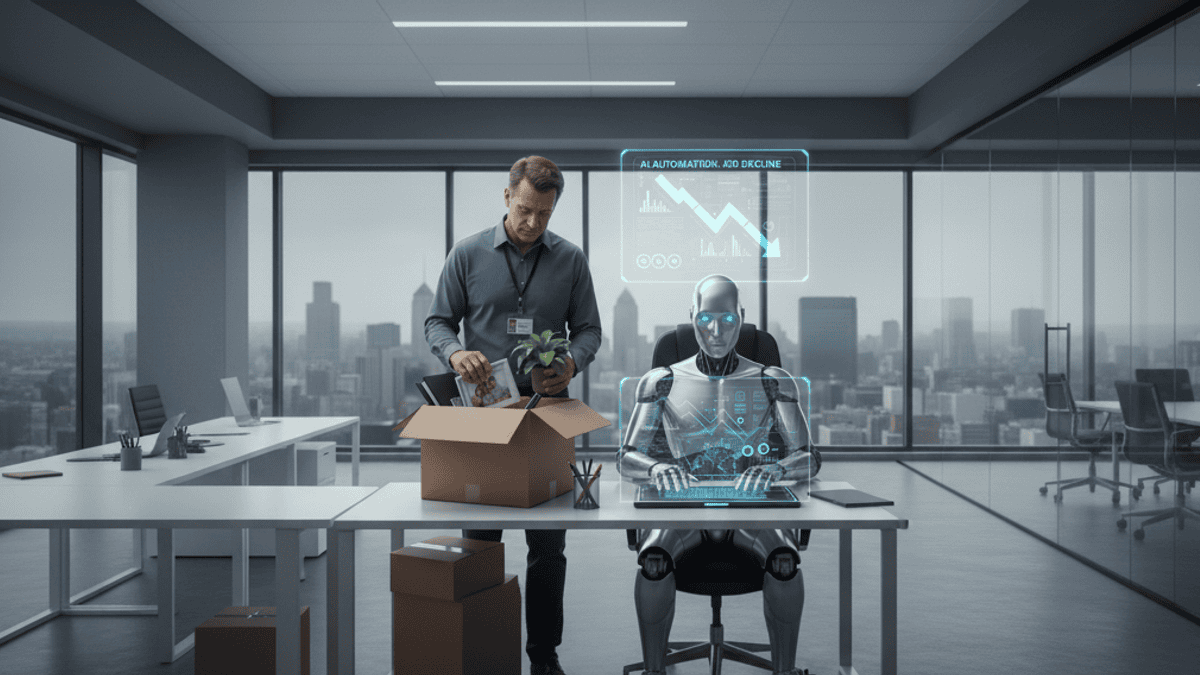
Artificial Intelligence (AI) is changing the way the world works. From customer support and software development to accounting, content writing, graphic design and data entry, AI-powered tools are performing tasks that previously required human employees.
What once took hours can now be completed in minutes. Businesses can generate reports, respond to customer queries, write articles, create images, analyse data and even develop software with the help of AI.
This transformation is creating an important question for millions of professionals:
Will AI take away our jobs, or will people who know how to use AI replace those who don’t?
The concern is particularly significant for employees working in IT services, business process outsourcing (BPO), customer support, administration, digital marketing and other computer-based professions.
AI is not simply another technological upgrade. It is changing how companies hire, how teams operate, how much work an employee is expected to complete and which professional skills businesses are willing to pay for.
In this article, we will explore the jobs most affected by AI, the reasons behind their decline, the industries experiencing disruption, and the career opportunities that could emerge in the AI-driven economy.
1. Are Jobs Really Disappearing Because of AI?
Yes, AI is contributing to the transformation and potential elimination of certain jobs. However, it is important to distinguish between jobs that have already disappeared, jobs experiencing reduced hiring, and jobs that are expected to become less common.
Not every job exposed to AI will disappear.
According to the International Labour Organization (ILO), approximately one in four workers worldwide is employed in an occupation with some degree of generative AI exposure. However, the organisation believes that job transformation is more likely than complete replacement for most occupations.
The World Economic Forum’s Future of Jobs Report 2025 also highlights significant changes in the employment market.
Its projections suggest that:
- 170 million new jobs could be created globally by 2030.
- 92 million existing jobs could be displaced.
- The resulting net increase could be 78 million jobs.
- Approximately 39% of workers’ existing skills could change or become outdated between 2025 and 2030.
These figures demonstrate that the employment market is changing, not simply disappearing.
The biggest risk is that traditional jobs may decline faster than workers can transition into new opportunities.
Sources: International Labour Organization and World Economic Forum.
2. Why Is AI Replacing Human Workers?
Businesses are adopting AI because it can reduce operating costs, improve productivity and automate repetitive work.
Here are the major reasons.
2.1 Reduced Operating Costs
Companies spend significant amounts on employee salaries, recruitment, training, infrastructure and employee benefits.
AI tools can perform many repetitive tasks at a fraction of the ongoing cost.
For example:
- A company can use an AI chatbot instead of hiring additional agents for basic customer questions.
- An AI writing assistant can generate initial drafts instead of assigning every article to a writer.
- Accounting software can automatically process invoices and organise financial records.
- AI-powered testing tools can identify software issues without requiring every test to be performed manually.
For businesses, reducing repetitive labour costs can make a significant difference.
2.2 Faster Work Completion
AI can process large amounts of information much faster than a human working manually.
Tasks that previously required several hours can sometimes be completed in minutes.
Examples include:
- Generating reports.
- Analysing spreadsheets.
- Creating marketing content.
- Writing basic code.
- Summarising documents.
- Responding to common customer questions.
2.3 Availability Around the Clock
AI-powered systems can operate continuously without conventional working hours.
Customer service chatbots, automated appointment systems and virtual assistants can respond to users at any time.
2.4 Fewer Employees Can Handle More Work
One of the biggest changes is not necessarily replacing an entire department.
Instead, businesses can use AI to increase the productivity of existing employees.
A team of five people using AI may be able to complete work that previously required ten people.
This can reduce the need for new recruitment, particularly for junior and repetitive roles.
2.5 Improved Automation
Modern AI systems can do more than generate text.
They can interact with software, analyse information, process requests, generate reports and complete multiple steps in a workflow.
As these systems improve, more traditional office tasks become candidates for automation.
3. Top 25+ Jobs Most at Risk Due to AI
The following occupations are particularly exposed to AI automation because they involve repetitive, predictable, digital or standardised tasks.
This is a risk-based list, not a claim that all these professions have already disappeared.
1. Data Entry Operators
Risk level: Very high
Data entry is among the most vulnerable occupations.
Traditionally, data entry professionals manually entered information into spreadsheets, databases, forms and business management systems.
AI-powered tools can now:
- Extract information from documents.
- Read invoices and receipts.
- Populate spreadsheets.
- Process digital forms.
- Identify duplicate records.
- Organise large datasets.
Companies increasingly have opportunities to automate these repetitive activities.
Future outlook: Traditional manual data entry positions are likely to face continued pressure. Professionals can move towards data quality management, analytics and database administration.
2. Basic Customer Support Representatives
Risk level: Very high
Customer support is undergoing one of the most visible AI-driven transformations.
AI chatbots and virtual assistants can handle:
- Order status enquiries.
- Refund-related questions.
- Password reset instructions.
- Account information requests.
- Frequently asked questions.
- Basic troubleshooting.
Businesses can automate a large proportion of routine customer conversations.
Human agents will still be important for complicated technical issues, sensitive complaints, escalations and situations requiring judgement.
Future outlook: Basic support roles may decline, while technical support specialists, escalation experts and AI-assisted customer experience professionals could become more valuable.
3. Telemarketing Executives
Risk level: High
Traditional telemarketing involves calling potential customers, explaining products and collecting leads.
AI voice systems can increasingly:
- Make automated calls.
- Qualify potential customers.
- Answer common questions.
- Schedule appointments.
- Follow up with leads.
Human sales professionals will remain important for relationship building, negotiation and complex sales.
4. Basic Content Writers
Risk level: High
AI writing tools can generate:
- Blog drafts.
- Product descriptions.
- Social media captions.
- Email newsletters.
- Basic website content.
- Advertising copy.
- Frequently asked questions.
This creates pressure on writers who produce large quantities of generic content.
However, original research, investigative writing, subject expertise, interviews, brand storytelling and editorial judgement remain important.
Future outlook: Generic content production faces pressure. Writers who understand SEO, research, content strategy and AI-assisted publishing can develop stronger career opportunities.
5. Proofreaders and Basic Editors
Risk level: High
AI tools can identify:
- Spelling mistakes.
- Grammar errors.
- Punctuation problems.
- Repeated phrases.
- Inconsistent writing styles.
- Basic readability issues.
However, human editors remain valuable for fact-checking, context, tone, legal sensitivity and editorial decisions.
6. Basic Graphic Designers
Risk level: High
AI image generators and design platforms can create:
- Social media graphics.
- Promotional banners.
- Advertisements.
- Blog featured images.
- Product mockups.
- Simple illustrations.
- Presentation layouts.
Small businesses can generate basic visual assets without hiring a designer for every requirement.
Nevertheless, advanced branding, creative direction, user experience and complex design systems still require human expertise.
7. Basic Translators
Risk level: High
AI translation systems can translate large volumes of text quickly.
Common applications include:
- Website translation.
- Email translation.
- Document translation.
- Product descriptions.
- Basic customer communications.
Specialised translators are still required for legal, medical, literary and culturally sensitive material.
8. Transcriptionists
Risk level: Very high
AI speech recognition can convert audio and video into written text.
It can also:
- Identify speakers.
- Generate subtitles.
- Create meeting summaries.
- Organise transcripts.
- Search recorded conversations.
Traditional manual transcription is therefore under considerable pressure.
9. Basic Bookkeepers
Risk level: High
Accounting platforms increasingly automate routine financial activities.
Examples include:
- Recording transactions.
- Categorising expenses.
- Generating invoices.
- Reconciling bank statements.
- Preparing basic financial reports.
Experienced accountants who understand financial regulations, auditing, taxation and business strategy remain important.
10. Payroll Processing Executives
Risk level: High
Payroll systems can automate salary calculations, attendance records, deductions and payslip generation.
Employees performing repetitive payroll administration may face increased automation.
Human specialists will still be needed for compliance, complex employee issues and payroll audits.
11. Basic Software Testers and QA Professionals
Risk level: High
AI-assisted software testing can:
- Generate test cases.
- Identify common bugs.
- Automate regression testing.
- Analyse test results.
- Detect repetitive failures.
This does not mean software quality assurance will disappear.
Complex testing, security testing, exploratory testing and business-critical validation still require skilled professionals.
12. Junior Programmers Performing Repetitive Coding
Risk level: High
AI coding assistants can generate:
- Basic functions.
- Repetitive code.
- Simple scripts.
- Unit tests.
- Documentation.
- Common website components.
Junior developers who only perform straightforward coding may face stronger competition.
Developers with architecture, debugging, security and problem-solving capabilities will have an advantage.
13. Basic SEO Executives
Risk level: Medium to high
AI tools can assist with:
- Keyword research.
- Meta descriptions.
- SEO titles.
- Content outlines.
- Competitor summaries.
- Basic content optimisation.
However, SEO requires more than generating keywords and articles.
Technical SEO, search intent, website architecture, digital PR, analytics and strategic decision-making remain valuable.
14. Social Media Content Executives
Risk level: Medium to high
AI can create captions, suggest content calendars, generate graphics and prepare basic social media campaigns.
The repetitive production side of social media management is becoming easier to automate.
Human professionals are still needed for community management, brand identity, campaign strategy and audience relationships.
15. Basic Research Assistants
Risk level: Medium to high
AI can summarise documents, extract information, compare reports and generate research outlines.
However, validating evidence, conducting interviews, interpreting results and producing original research still require human involvement.
16. Administrative Assistants
Risk level: High
AI assistants can help with:
- Scheduling meetings.
- Drafting emails.
- Organising documents.
- Preparing reports.
- Managing routine reminders.
- Summarising conversations.
Traditional administrative roles may increasingly evolve into operations coordination and executive support positions.
17. Receptionists Handling Routine Enquiries
Risk level: Medium to high
Automated systems can answer calls, schedule appointments, provide directions and handle common enquiries.
Physical reception roles involving visitors, security, hospitality and personal assistance are harder to automate completely.
18. Bank Tellers and Basic Banking Clerks
Risk level: High
Digital banking, automated transactions and AI-powered customer service are changing traditional banking operations.
Routine transactions can increasingly happen through mobile applications and self-service systems.
Complex financial advice, relationship management and specialised banking services still require people.
19. Insurance Claims Processing Executives
Risk level: High
AI can assist with:
- Extracting information from claim documents.
- Checking policy details.
- Identifying missing information.
- Detecting suspicious patterns.
- Categorising claims.
Complex claims, investigations and disputed decisions still need human oversight.
20. Basic Financial Analysts
Risk level: Medium to high
AI can analyse financial data, generate summaries, compare performance and prepare preliminary forecasts.
However, investment decisions, risk assessment, regulatory interpretation and understanding economic conditions require professional judgement.
21. Basic Video Editors
Risk level: Medium to high
AI-powered editing tools can automatically:
- Remove pauses.
- Generate subtitles.
- Create short clips.
- Resize videos.
- Improve audio.
- Suggest edits.
Advanced storytelling, creative direction and complex video production remain human-intensive.
22. Product Description Writers
Risk level: Very high
E-commerce businesses often need thousands of product descriptions.
AI can generate standardised product descriptions using product specifications, images and existing information.
This reduces the need for manually writing repetitive descriptions.
23. Basic Email Marketing Executives
Risk level: Medium to high
AI can generate email campaigns, subject lines, personalised messages and automated follow-ups.
Professionals who understand customer segmentation, deliverability, conversion optimisation and campaign strategy remain valuable.
24. Document Processing Clerks
Risk level: High
AI-powered document processing can extract, classify and organise information from contracts, applications, forms and reports.
This can reduce the requirement for repetitive manual document handling.
25. Basic IT Help Desk and Level 1 Support Agents
Risk level: Very high
AI assistants can answer common IT questions and provide standard troubleshooting instructions.
Examples include:
- Password reset guidance.
- Software installation instructions.
- Basic network troubleshooting.
- Account access assistance.
- Common application errors.
- Standard configuration guidance.
This is especially important for IT service companies and managed service providers.
Future outlook: Basic ticket handling may decline, but advanced technical support, infrastructure troubleshooting, cybersecurity, cloud administration and complex problem resolution remain important.
26. Basic Website Developers
Risk level: Medium to high
AI website builders and coding assistants can generate simple websites, landing pages and standard website components.
Businesses may no longer need a developer for every basic website requirement.
However, custom development, integrations, performance optimisation, security and complex WordPress implementations still require technical knowledge.
27. Basic Customer Service Email Executives
Risk level: High
AI can read incoming emails, identify their purpose, draft responses and categorise support requests.
Human agents will remain necessary for complex cases, complaints, exceptions and sensitive customer situations.
4. Which Industries Are Most Affected by AI?
AI disruption is not limited to technology companies. It is affecting several industries.
| Industry | Work most exposed to automation |
|---|---|
| IT services | Basic coding, testing, L1 support |
| BPO | Customer service, data processing |
| Banking | Routine transactions, documentation |
| Finance | Basic reporting, bookkeeping |
| Marketing | Generic content and campaign production |
| Media | Transcription, basic editing |
| E-commerce | Product descriptions, support |
| Education | Basic content and administrative tasks |
| Insurance | Routine claims processing |
| Recruitment | Resume screening and scheduling |
The degree of disruption varies between companies and occupations.
5. What Does AI Mean for the Indian Job Market?
India is particularly important in this discussion because its economy has a large technology services, IT outsourcing and BPO workforce.
Many businesses in India provide software development, technical support, customer service, accounting and back-office operations to international clients.
These industries have traditionally created employment opportunities for millions of people.
However, AI is changing their business models.
5.1 IT Services Could Experience Major Changes
According to NITI Aayog’s October 2025 Roadmap for Job Creation in the AI Economy, India’s technology services and customer experience sectors face significant disruption.
The roadmap presents a business-as-usual scenario in which:
- Technology services employment could decline from approximately 7.5–8 million in 2023 to 6 million by 2031.
- Customer experience employment could decline from approximately 2–2.5 million to 1.8 million.
These are scenario-based projections, not confirmed future job losses.
The same roadmap also identifies opportunities for India to create new employment through AI adoption, reskilling and new technology services.
5.2 BPO Companies May Need Fewer Employees for Routine Tasks
Traditional BPO operations often involve:
- Answering customer calls.
- Processing applications.
- Updating records.
- Handling emails.
- Performing repetitive administrative work.
AI can automate many of these activities.
Companies may increasingly employ smaller teams of specialists supported by automated systems.
5.3 Fresh Graduates May Face Stronger Competition
Entry-level employees often begin their careers by performing routine tasks.
These are precisely the types of activities AI tools are becoming increasingly capable of performing.
Consequently, fresh graduates may need practical skills and demonstrable experience rather than relying only on academic qualifications.
5.4 Traditional Technical Support Roles May Change
India has a large technical support workforce.
AI-powered troubleshooting and automated help desks can handle common technical problems.
Professionals will need to move towards:
- Advanced troubleshooting.
- Cloud infrastructure.
- Cybersecurity.
- AI implementation.
- Technical consulting.
- Complex customer escalations.
Sources: NITI Aayog’s Roadmap for Job Creation in the AI Economy and IMF analysis of AI’s impact on India’s economy.
6. Are Software Developers Also at Risk?
Yes. Software development is one of the professions being significantly transformed by AI.
AI coding tools can generate code, explain programming concepts, identify bugs and help developers build applications.
However, software engineering involves much more than writing code.
Developers must understand:
- Business requirements.
- Application architecture.
- Database design.
- Security.
- Performance.
- Scalability.
- Integration.
- Testing.
- Maintenance.
AI can assist with many implementation tasks, but someone must still understand the overall system and take responsibility for its reliability.
The future software developer may spend less time writing repetitive code and more time designing, reviewing, testing and managing AI-assisted development.
7. Are WordPress Developers and Support Professionals at Risk?
WordPress is another area where AI is changing traditional work.
AI tools can generate website layouts, CSS, PHP snippets, JavaScript, content and troubleshooting suggestions.
Website builders are also becoming easier to use.
This means some basic WordPress services may become less profitable.
WordPress tasks increasingly supported by AI
- Installing and configuring basic plugins.
- Creating simple website layouts.
- Generating website content.
- Writing basic CSS.
- Generating simple PHP snippets.
- Creating landing pages.
- Troubleshooting common errors.
- Producing documentation.
- Writing basic custom code.
- Generating SEO metadata.
WordPress skills that remain valuable
- Advanced WordPress troubleshooting.
- WooCommerce customisation.
- WordPress security.
- Website migration.
- Performance optimisation.
- Server and hosting management.
- Plugin and theme development.
- API integrations.
- Database troubleshooting.
- Complex technical support.
The biggest opportunity is to become a WordPress professional who can use AI to solve complicated problems faster.
Instead of competing with AI on basic website creation, professionals should focus on delivering solutions that require technical understanding and responsibility.
8. Jobs That Are Less Likely to Be Completely Replaced by AI
Not every profession faces the same level of automation risk.
Jobs involving physical work, human relationships, unpredictable environments, empathy and complex decision-making can be harder to automate.
Examples include:
Healthcare
- Doctors.
- Nurses.
- Surgeons.
- Physiotherapists.
- Emergency medical professionals.
Skilled Trades
- Electricians.
- Plumbers.
- Carpenters.
- Mechanics.
- HVAC technicians.
Education
- Special education teachers.
- Practical instructors.
- Mentors.
- Early childhood educators.
Human Relationships
- Psychologists.
- Social workers.
- Counsellors.
- Caregivers.
Creative and Strategic Work
- Creative directors.
- Business strategists.
- Experienced consultants.
- Brand strategists.
- Entrepreneurs.
These professions may also use AI, but their human responsibilities make complete automation more difficult.
No occupation should be considered permanently immune to technological change.
9. Which New Jobs Will AI Create?
While AI threatens some traditional roles, it is also creating demand for new skills and services.
Some emerging career opportunities include:
- AI Automation Specialist: Builds automated business workflows using AI tools.
- AI Engineer: Develops and integrates AI-powered applications.
- AI Solutions Architect: Designs AI systems for business requirements.
- AI Trainer: Helps improve AI systems through training and evaluation.
- AI Quality Analyst: Tests AI-generated results for accuracy and reliability.
- AI Security Specialist: Protects AI systems against security threats.
- AI Governance Specialist: Helps organisations manage responsible AI use.
- Data Engineer: Builds systems for collecting and processing data.
- Data Analyst: Uses data to support business decisions.
- Machine Learning Engineer: Develops machine learning models.
- AI Product Manager: Manages AI-powered products.
- AI Content Strategist: Combines AI tools with content planning and editorial expertise.
- AI Workflow Consultant: Helps companies identify and automate repetitive processes.
- Cybersecurity Analyst: Protects organisations from digital threats.
- Cloud Engineer: Manages cloud infrastructure and services.
- AI Agent Developer: Creates AI agents capable of completing multi-step tasks.
- Robotics Engineer: Develops intelligent robotic systems.
- AI Ethics Specialist: Works on fairness, transparency and responsible AI.
- MLOps Engineer: Manages the deployment and monitoring of machine learning systems.
- AI Integration Specialist: Connects AI systems with existing business applications.
The important point is that not everyone needs to become an AI researcher or machine learning engineer.
There are opportunities for professionals who understand an existing industry and learn how to apply AI to its problems.
10. Skills You Should Learn to Protect Your Career
The best way to respond to AI disruption is to improve your professional capabilities.
Here are ten important skill areas.
10.1 AI Literacy
Understand how AI works, what it can do and where it makes mistakes.
Learn to use:
- ChatGPT.
- Claude.
- Gemini.
- Microsoft Copilot.
- Perplexity.
10.2 Prompt Engineering and AI Communication
Learn how to provide clear instructions, context, examples and requirements to AI systems.
Good prompting helps you get more accurate and useful results.
10.3 Automation
Learn how to automate repetitive business processes.
Useful tools include:
- n8n.
- Make.
- Zapier.
- Power Automate.
10.4 Data Analysis
Learn how to understand and interpret data.
Important skills include:
- Excel.
- Google Sheets.
- SQL.
- Power BI.
- Data visualisation.
10.5 Cybersecurity
As businesses adopt more digital systems, protecting applications, networks and information becomes increasingly important.
10.6 Cloud Computing
Learn the fundamentals of:
- AWS.
- Microsoft Azure.
- Google Cloud.
- Linux.
- Server management.
10.7 Programming and API Integration
Even if AI generates code, understanding programming fundamentals helps you review, debug and integrate solutions.
10.8 Critical Thinking
AI can produce incorrect information confidently.
Professionals must know how to evaluate answers, verify facts and make informed decisions.
10.9 Communication and Problem-Solving
Human communication, customer relationships and complex problem-solving remain important professional capabilities.
10.10 Domain Expertise
Knowing how a specific industry works is a major advantage.
For example, someone who understands WordPress, WooCommerce, hosting and website security can use AI to deliver specialised solutions that a general AI user may not be able to implement independently.
11. A Practical 6-Month Plan to Prepare for the AI Job Market
You do not need to learn everything at once.
A structured learning plan can help you move towards a more sustainable career.
Month 1: Understand AI Tools
- Learn ChatGPT and other AI assistants.
- Understand prompt writing.
- Learn AI research and content generation.
- Practise using AI for daily professional tasks.
Month 2: Learn Automation
- Learn n8n, Make or Zapier.
- Create automated workflows.
- Connect different applications.
- Automate repetitive business tasks.
Month 3: Develop Technical Skills
- Learn API fundamentals.
- Improve programming knowledge.
- Understand databases.
- Learn basic cloud and server concepts.
Month 4: Choose a Specialisation
Select one career direction:
- AI automation.
- Cloud engineering.
- Cybersecurity.
- Data analytics.
- AI-assisted WordPress development.
- Technical consulting.
Month 5: Build Real Projects
Create at least three practical projects.
For example:
- An AI-powered customer support assistant.
- An automated WordPress website maintenance workflow.
- An AI-based website troubleshooting assistant.
Month 6: Build Your Professional Profile
- Update your resume.
- Create a professional portfolio.
- Publish your projects.
- Demonstrate measurable results.
- Apply for roles that combine your existing experience with new technical skills.
The objective is not to collect certificates. It is to demonstrate that you can solve real business problems.
12. Should You Change Your Career Because of AI?
Not necessarily.
Changing careers completely can be expensive and time-consuming.
Before leaving your current profession, consider whether you can upgrade your existing role.
For example:
| Traditional role | Potential career direction |
|---|---|
| Customer support | AI-assisted technical support |
| Data entry | Data quality analyst |
| Content writer | Content strategist |
| Graphic designer | AI creative specialist |
| SEO executive | SEO and analytics strategist |
| WordPress developer | AI-powered web solutions developer |
| QA tester | Automation and AI testing specialist |
| IT support | Cloud and infrastructure specialist |
| Accountant | Financial systems and compliance specialist |
| BPO executive | AI workflow operations specialist |
Your existing industry knowledge, professional experience and problem-solving ability are valuable assets.
The strongest transition is often from doing repetitive tasks to managing, improving and automating those tasks.
13. How Businesses Should Prepare for AI
AI adoption is not only an employee responsibility.
Businesses also need to manage the transition carefully.
Companies should:
- Identify repetitive tasks that can be automated.
- Train existing employees to use AI.
- Create opportunities for internal role transitions.
- Invest in AI security and governance.
- Retain human oversight for important decisions.
- Redesign jobs around human and AI collaboration.
- Develop clear policies for responsible AI use.
- Evaluate productivity improvements without compromising service quality.
Businesses that simply replace employees without developing the skills of their remaining workforce may face new operational challenges.
14. Is AI a Threat or an Opportunity?
AI is both.
For someone performing repetitive tasks without developing additional skills, AI can represent a serious career threat.
For someone who understands technology, business processes and AI tools, it can become a productivity advantage.
Consider two hypothetical professionals:
Professional A
- Performs repetitive customer support.
- Uses the same manual processes every day.
- Does not learn new tools.
- Has limited technical troubleshooting skills.
Professional B
- Understands customer support.
- Uses AI to automate common enquiries.
- Handles advanced technical problems.
- Builds customer support workflows.
- Analyses support performance.
Both professionals may work in the same industry, but their future career opportunities could be very different.
The goal should be to become Professional B.
15. Final Thoughts: The Future Belongs to People Who Adapt
Artificial Intelligence is changing employment across industries.
Data entry, basic customer support, repetitive content writing, transcription, routine accounting, administrative work and basic software testing are among the occupations facing significant automation pressure.
However, it would be incorrect to conclude that every job in these professions will disappear.
The ILO, World Economic Forum and other organisations highlight that AI will both transform existing jobs and create new opportunities.
For employees, the most important action is to start learning before their current responsibilities become fully automated.
Do not wait until your company introduces AI-driven restructuring to think about your next career move.
Start experimenting with AI tools. Improve your technical skills. Learn automation. Build real-world projects. Develop expertise that goes beyond repetitive tasks.
AI may replace certain tasks, but people who know how to use AI, solve complex problems and deliver real value will be better positioned for the future.
The future of work is not simply AI versus humans.
It is increasingly about humans who know how to work effectively with AI.